The best carpet for high traffic areas is usually a dense, low-pile nylon carpet because it resists wear and springs back well after repeated foot traffic. For busy offices, commercial-rated nylon carpet tiles also make damaged sections easier to replace, while a well-made wool carpet can suit homes with a larger budget. Choose a product rated for the space, then check its construction, backing and underlay rather than relying on the fibre name alone.
What Makes Carpet Suitable for Heavy Foot Traffic?
A durable carpet needs fibres that recover from pressure and tightly packed yarn that keeps the pile upright. Softness alone is a poor buying test because a deep, loosely packed carpet can feel comfortable in a shop but flatten quickly along a hallway.

Pressure is not spread evenly across a room. Doorways, the foot of stairs and the narrow route between a sofa and a kitchen take far more wear than the edges. A chair on wheels adds another kind of stress because it repeatedly presses and twists against the same small area.
Three problems often get called wear, but they need different solutions:
- Flattening happens when fibres stay pressed down, even though the carpet has not lost much material.
- Soiling happens when dirt, dust or oily residue changes the look of the walking route.
- Fibre loss happens when repeated friction damages or removes the yarn.
A carpet can resist stains yet still flatten, and a wear warranty may not cover that change in appearance. That is why a stain-resistant label is not enough to identify the best carpet for a busy home.
When comparing samples through Dubai Carpet Hub, ask for products suited to how you use the room. A family hallway, a reception area and a bedroom do not need the same carpet rating, even when the carpet colour is identical.
Which Carpet Material Handles Traffic Best?
Nylon is usually the safest starting point for heavy indoor traffic, while wool is a strong premium choice for homes. Polyester and polypropylene can suit tighter budgets, but how well they work depends more on their construction and the demands of the room.

| Material | Strength in a Busy Area | Main Limitation | Best Fit |
|---|---|---|---|
| Nylon | Good resistance to abrasion and good recovery after pressure | Stain protection varies by product, and it usually costs more than basic synthetics | Hallways, stairs, family rooms and offices |
| Wool | Naturally springy fibres and a good appearance in well-made carpet | Higher cost, careful cleaning and prompt spill treatment | Busy living rooms and quality residential spaces |
| Triexta | Good stain resistance and useful comfort in suitable products | Heavy-traffic performance varies by construction and product range | Family rooms where spills and softness both matter |
| Polyester | Good colour choice and resistance to many water-based spills | Often less able to recover from repeated crushing than nylon | Moderate-traffic rooms or budget projects with careful product selection |
| Polypropylene, Also Called Olefin | Affordable and resistant to many water-based stains | Can flatten under pressure and attract oily soil | Tight loop-pile products for suitable budget applications |
| Sisal | Firm surface with a natural woven look | Absorbs moisture, can stain and feels rougher underfoot | Dry indoor areas where spills are unlikely |
Why Nylon Is Usually the First Choice
Nylon combines strength with resilience, which means the fibres can spring back after being pressed down. That makes it useful where people repeatedly walk along the same path, although a loose, tall nylon pile can still perform worse than a well-built carpet made from another fibre.
Solution-dyed nylon has colour added while the fibre is made rather than applied afterwards. It often offers good colour stability and stain resistance, but check the product’s cleaning instructions because this does not make every cleaning chemical safe.
For offices, look beyond the word nylon and ask whether the carpet is approved for the expected traffic and chair use. The guide to carpet tiles for offices in Dubai explains the choices that matter in workspaces.
When Wool or Sisal Makes Sense
Wool suits a busy home when you want comfort and can follow the care instructions. Its natural crimp, or slight curl, helps the pile recover, but you still need to treat food and drink spills carefully and avoid unsuitable cleaning products.
Sisal carpet is a different choice rather than a direct substitute for wool. Its firm woven surface can work in a dry hallway, but an entrance that receives wet shoes or frequent spills is a poor match because water can leave marks and affect the fibres.
Do not treat every natural fibre as equally easy to maintain. Choose wool for a softer feel at home, and choose sisal for a firm woven look only where the risk of moisture is low.
Is Loop Pile or Cut Pile Better for Busy Areas?
A short, tightly made loop pile is often a strong choice for busy areas, while a dense, low cut pile is useful where snagging is a concern. What matters most is how closely the yarn is packed and supported, not simply whether the surface has loops.
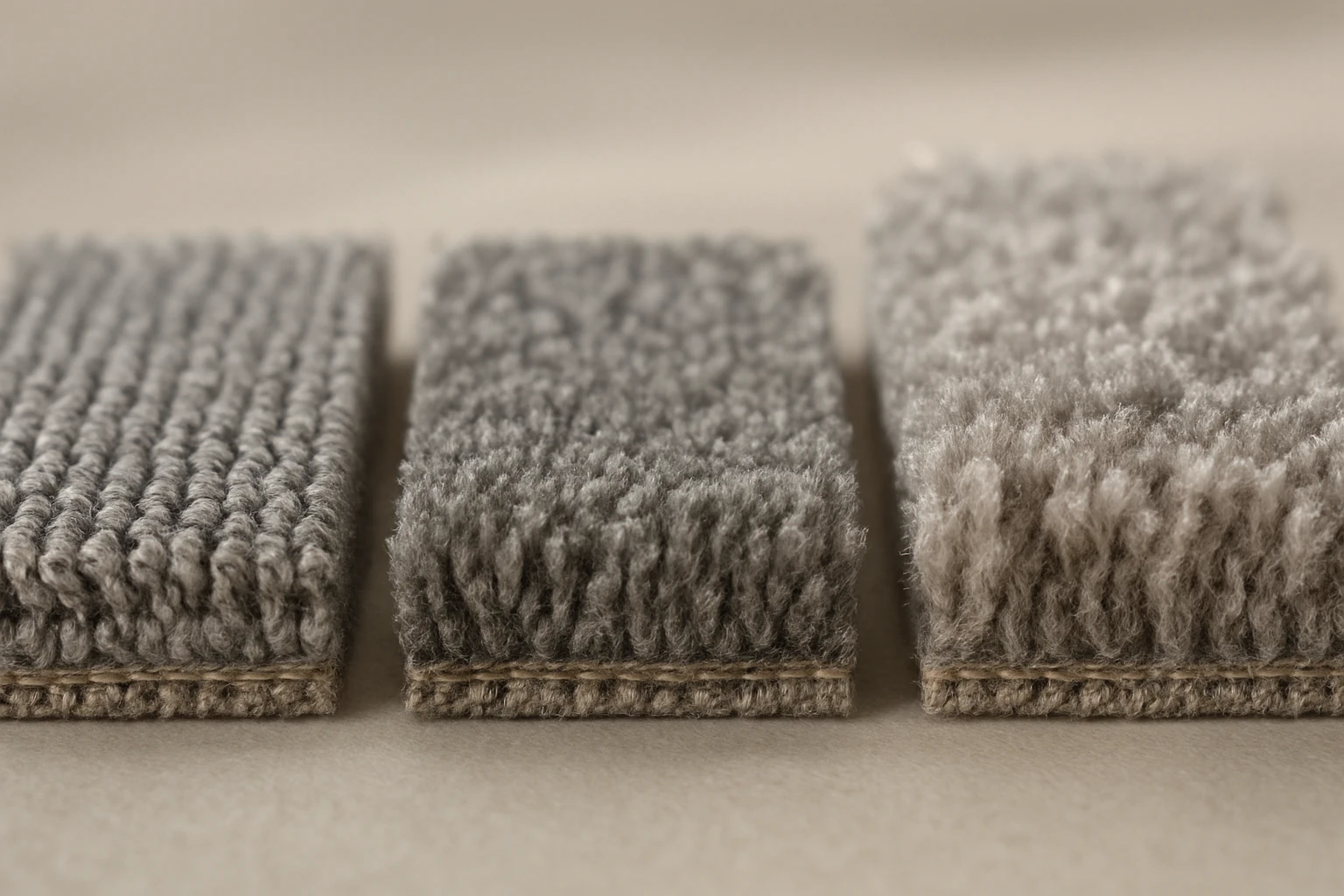
Pile is the visible layer of yarn above the backing. Loop pile leaves the yarn in loops, while cut pile cuts the tops of those loops to create separate strands.
| Carpet Construction | What It Does Well | What to Watch For |
|---|---|---|
| Tight Level Loop | Holds its shape well and keeps a neat surface | Claws or sharp objects can catch loops |
| Dense Low Cut Pile | Balances comfort with practical wear resistance | Loose yarn packing can still lead to flattening |
| Twisted Cut Pile | Twisted yarn can disguise footprints and support a textured look | Long pile may still bend along busy routes |
| Cut-and-Loop Pattern | Texture helps hide small marks and adds visual interest | Raised parts may change appearance before lower parts |
| Deep Plush or Shag | Feels soft and works in low-use spaces | Traps more debris and is a poor first choice for narrow traffic lanes |
A common mistake is choosing a carpet by face weight alone. Face weight is the weight of the visible yarn per unit of area, but a taller carpet can contain more yarn without having a tighter surface. Compare face weight alongside pile height, density and the product’s use rating.
Bending a sample back helps you see how closely the tufts are packed, although it is not a substitute for the product’s technical details. Large gaps in a tall pile are a warning sign when you are choosing carpet for a busy corridor.
What About Berber Carpet?
Berber often describes a loop-pile look, sometimes with flecks of colour, rather than a specific fibre or quality level. A nylon Berber and a polypropylene Berber may look similar but behave differently under repeated pressure and oily dirt.
Small, tight loops usually make more sense for busy areas than large, loose loops. In a home with pets that scratch the floor, a dense cut pile may be the better choice because a caught claw can pull a loop and leave a visible snag.
Choose Carpet for the Way Each Space Is Used
The best carpet changes with the type of traffic, not just the number of people. Stairs need secure fitting, offices need resistance to chair movement, and entrances need a plan to stop sand reaching the carpet.

| Space | Sensible Starting Choice | Detail That Often Gets Missed |
|---|---|---|
| Hallway | Dense low-pile nylon or a suitable tight loop | Dirt enters from nearby doors, so matting matters |
| Stairs | Stair-rated dense carpet with a suitable backing | The carpet must fit securely around each step edge |
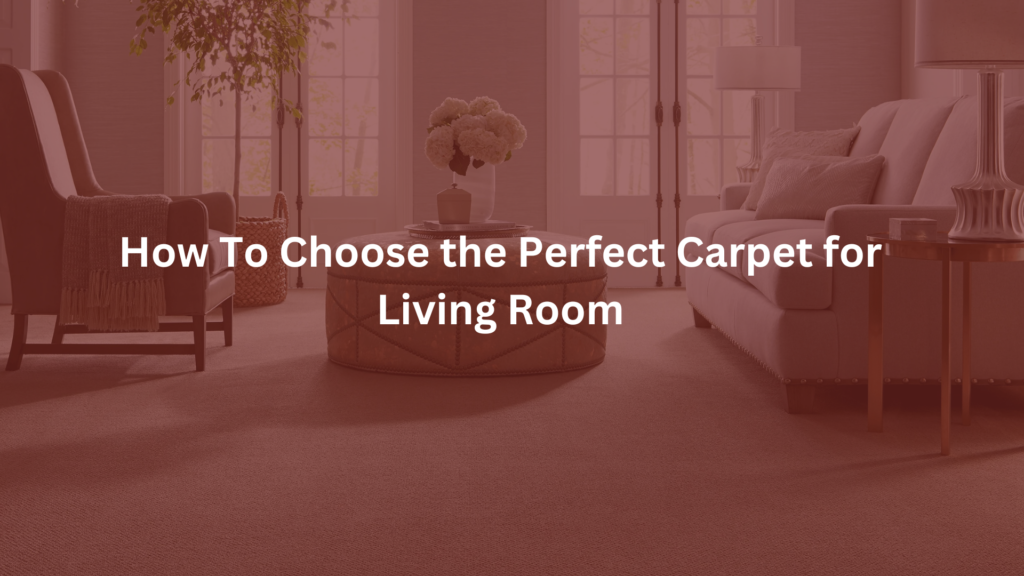
| Family Living Room | Dense nylon, suitable triexta or quality wool | Spills and pet behaviour may matter as much as foot traffic |
| Office or Reception | Commercial-rated carpet tiles or broadloom | Rolling-chair use needs its own product approval |
| Prayer Hall | Durable carpet rated for the expected use | Comfort and repeat wear in particular positions both matter |
| Outdoor or Exposed Entrance | Carpet specifically made for outdoor use | Indoor backing may not tolerate repeated moisture or weather exposure |
Hallways, Stairs and Family Rooms
For a hallway, choose the carpet for the busiest stretch rather than the average use of the whole home. A narrow passage gives people little room to vary their steps, so one strip can flatten while the rest still looks new.
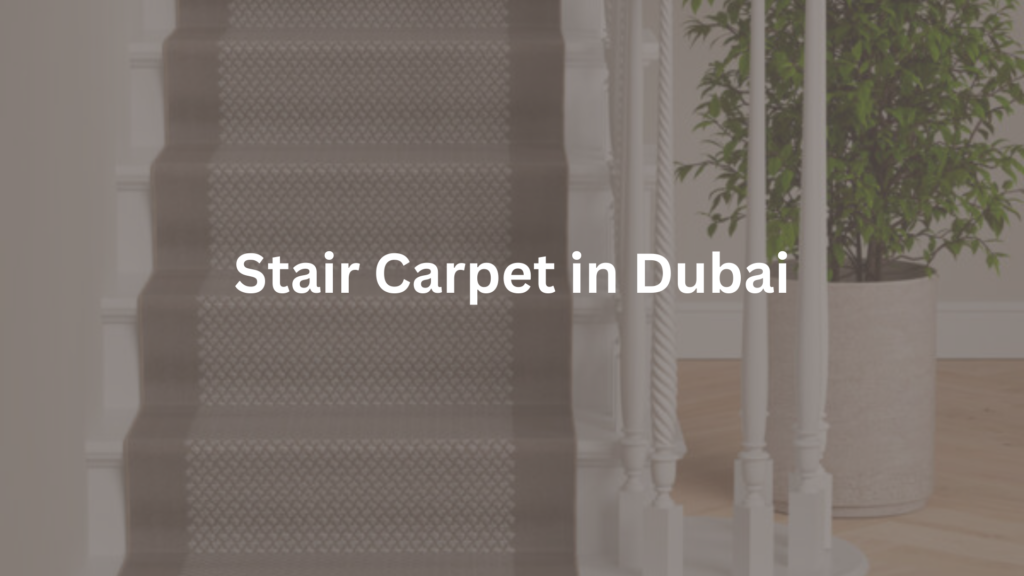
On stairs, use stair carpet that the manufacturer approves for that purpose. A carpet that works on a flat floor may not bend neatly around the step edge, and poor fitting can let the carpet move or leave a loose edge.
In a family room, a dense living room carpet offers a practical middle ground between softness and wear resistance. For example, a household with a scratching cat may benefit more from low cut pile than from a loop carpet that performs well in a pet-free hallway.
Offices and Other Shared Spaces
Commercial office carpet should match the actual work setting. A quiet meeting room and a reception route used all day place different demands on the floor.
Carpet tiles are especially useful where damage is likely to affect a small area, since a stained or worn tile can be replaced without removing the whole floor. Keep spare tiles from the same production batch because later orders may differ slightly in colour.
For a prayer hall, mosque carpet needs to balance comfort with repeated use. A very thick, soft pile is not automatically the best choice, particularly where the same rows and access routes receive steady traffic.
Temporary exhibition carpet serves a different purpose. Do not assume that a product intended for a short event will suit years of daily office use.
An exposed balcony or wet entrance needs outdoor carpet with suitable backing and weather resistance. An indoor heavy-traffic rating does not prove that a carpet can cope outdoors.
What Should You Check on the Product Specification?
Check the stated use class, pile construction, backing and fitting requirements before buying carpet for heavy traffic. A written specification is more useful than a showroom description such as “extra durable” or “luxury quality”.

Where a carpet uses the EN 1307 classification system, class 23 indicates heavy domestic use, while classes 32 and 33 indicate general and heavy commercial use. These are published standard classifications, not promises that every carpet will look unchanged under every condition.
Ask for the actual product data sheet because retail labels do not always show the classification. Also check whether the carpet is approved for stairs or castor chairs if you plan to use it with either. A general traffic rating does not answer those questions on its own.
Follow these steps when buying:
- Identify the busiest route and the main risk, such as sand, spills, pet claws or rolling chairs.
- Confirm the fibre, pile type and stated use rating on the product sheet.
- Ask which backing, underlay and fitting method the manufacturer requires.
- Read what the warranty says about wear, flattening, stains and exclusions.
- Check the sample in the room’s daylight before approving the colour.
Underlay and Fitting Can Change the Result
Underlay is the cushioning layer beneath carpet, and it needs to support the product rather than simply feel soft. A thick, very soft pad can allow too much movement under repeated steps, while some commercial carpets need to be bonded directly to the floor instead.
Choose carpet underlay to suit the carpet and room, not as a separate comfort upgrade. The guide to underlay for wall-to-wall carpets explains why you need to consider thickness and firmness together.
With wall-to-wall carpet, fitting tension, seams and floor condition matter too. A poorly secured carpet can develop ripples, and a seam placed where people often turn may face more stress than one away from the main route.
Which Colours Hide Everyday Marks, and What Should You Budget?
Mid-tone, flecked carpet usually hides everyday dust and small marks better than plain white or very dark carpet. When setting your budget, compare the complete fitted price because the carpet’s supply price leaves out several costs that can change the final bill.

A medium shade of grey carpet with a subtle fleck can work well in a Dubai home, where pale sand may show clearly on a very dark floor. Taupe and mixed neutral shades can also disguise day-to-day debris, although no colour prevents dirt from damaging fibres.
Plain carpet can make a traffic lane more obvious because the worn strip catches light differently. A mild pattern helps break up that change, but strong sunlight across the floor can still reveal flattened pile.
For an early budget in Dubai, many synthetic indoor carpets cost roughly AED 60 to AED 180 per square metre for supply only. This is a broad planning range rather than a quotation. Basic event carpet can cost less, while premium wool, specialist commercial products and designer ranges can cost much more. Prices vary by supplier, order size and location.
Ask for a quote that separates:
- Carpet supply and the actual area ordered.
- Underlay or adhesive, as required by the product.
- Fitting, floor preparation and old carpet removal.
- Stair work, trims, delivery and applicable VAT.
Roll width and room shape affect the amount you buy, so you may need to order more carpet than the floor area suggests. For example, if a measured layout needs 24 square metres of carpet at an assumed AED 100 per square metre, the supply cost is AED 2,400 before fitting and other charges. The rate is only an example, not a business quotation.
Do not add a fixed waste percentage without checking the layout. A narrow corridor cut from a wide roll can leave more unused material than a simple rectangular room. The Dubai carpet buying guide can help you compare a wider range of products alongside the quote.
How Do You Keep a Busy Carpet Looking Better for Longer?
Removing dry dirt often and using good entrance mats are the most useful steps for protecting a busy carpet. Sand left in the pile acts like grit under repeated footsteps, so stain treatment alone will not prevent wear.
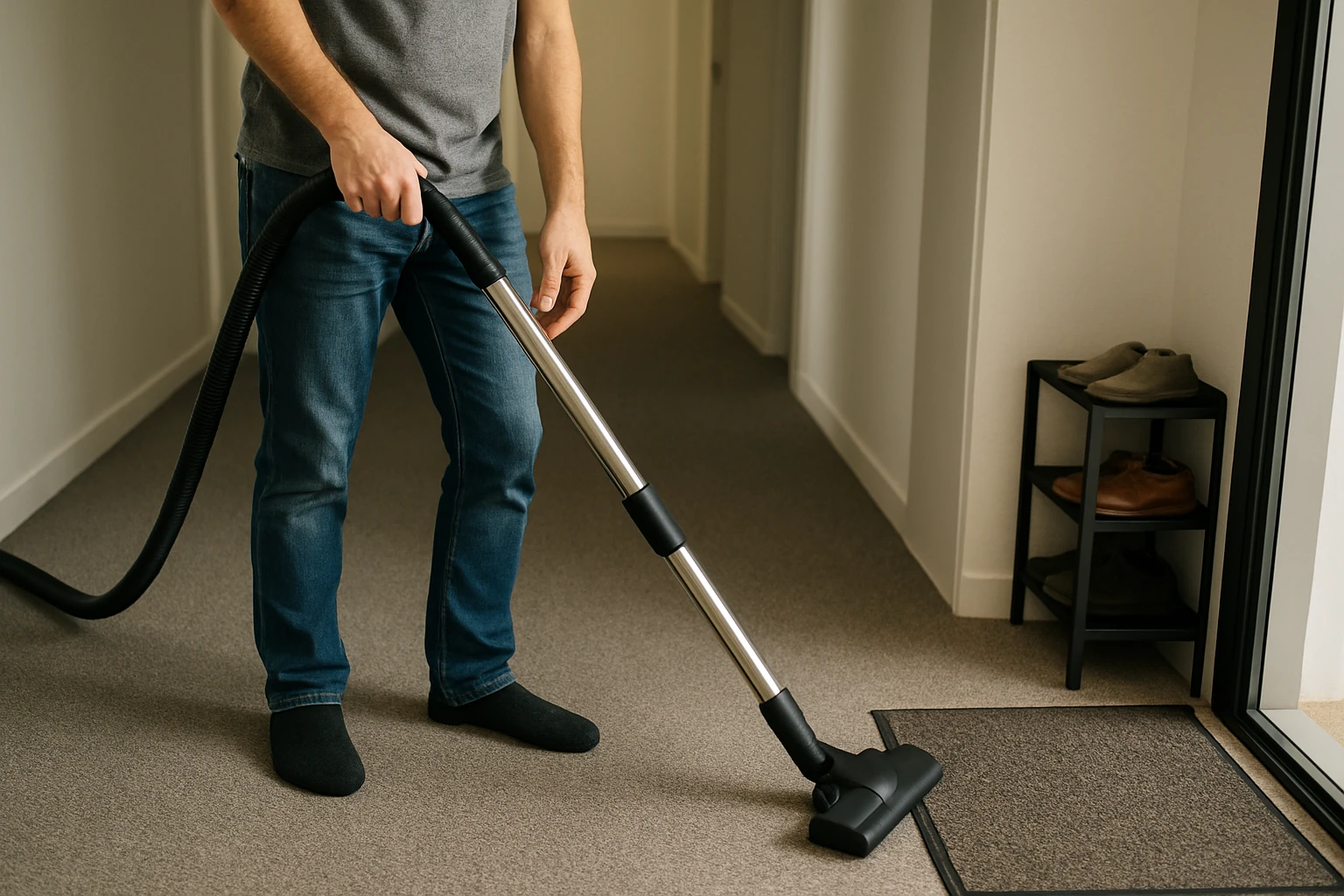
Vacuum the main walking routes more often than the quiet edges, and use the head setting recommended for the carpet. A busy entrance may need daily attention, while a lightly used room may need less. Empty the machine and keep filters clean so reduced suction does not leave fine dust behind.
Entrance mats work best when they give people enough space to take several steps before reaching the main carpet. Keep the mats clean as well, since a mat full of loose sand can carry dirt farther indoors rather than hold it at the door.
Cleaning Without Causing More Damage
Routine Care:
Remove loose grit before using a wet cleaning method, and check the maker’s instructions for brushes and cleaning products. Some loop carpets and natural fibres need gentler treatment than a standard rotating brush provides.
Spill Treatment:
Blot spills with a clean cloth rather than rubbing, which can spread the mark and roughen the pile. Avoid soaking the area because moisture that reaches the backing or underlay may dry slowly and create further problems.
Deep Cleaning:
Use the cleaning method approved for the specific carpet, and allow the floor to dry fully before returning it to heavy use. If a dark traffic lane remains after proper cleaning, it may be a change in pile shape rather than dirt, so repeated aggressive cleaning may not fix it.
For most busy homes, start with a dense, low-pile nylon carpet and choose a colour that suits the dust and light in the room. For offices, start with a commercial-rated nylon product and consider tiles where replacing a small section would cause less disruption. In both cases, the right rating, fitting and care plan matter more than choosing the thickest or softest sample.
Frequently Asked Questions
Is Carpet Suitable for a Busy Home with Allergies?
Carpet can suit some homes with allergies, but it needs regular cleaning and may not suit every person’s triggers. Low pile is easier to keep free of trapped debris than deep shag, and a vacuum with effective filtration helps control dust during cleaning. For severe symptoms, discuss flooring choices with a qualified health professional rather than relying on a carpet label.
Is Recycled Nylon Carpet as Durable as New Nylon Carpet?
Recycled nylon carpet can be suitable for heavy traffic when the finished product has the right construction and use rating. Recycled content alone does not tell you how well a carpet will resist flattening or wear. Compare the product specification, warranty and intended use rather than assuming recycled material is either weaker or stronger.
Will Heavy Furniture Leave Permanent Dents in Durable Carpet?
Heavy furniture can leave lasting dents even in carpet designed for heavy foot traffic. A sofa leg puts steady pressure on one small spot, which differs from the brief pressure of walking. Wide furniture cups can spread the load, but follow the carpet maker’s advice before trying steam or heat to lift a dent.
Can Sunlight Fade Carpet in a Dubai Home?
Strong sunlight can fade carpet, and a heavy-traffic rating does not measure resistance to fading. Ask for the product’s lightfastness information, which describes how well its colour withstands light exposure. Blinds or curtains can reduce direct sun, while checking a sample beside the window helps you judge its colour in the room.
Can I Replace One Worn Patch of Wall-to-wall Carpet?
A skilled fitter may be able to patch wall-to-wall carpet, but the repair may remain visible. Differences in wear, pile direction and colour can make a fresh piece stand out, even when it comes from leftover material. Keep offcuts from the original fitting, and ask a fitter to assess the damage before deciding between a patch and replacement.