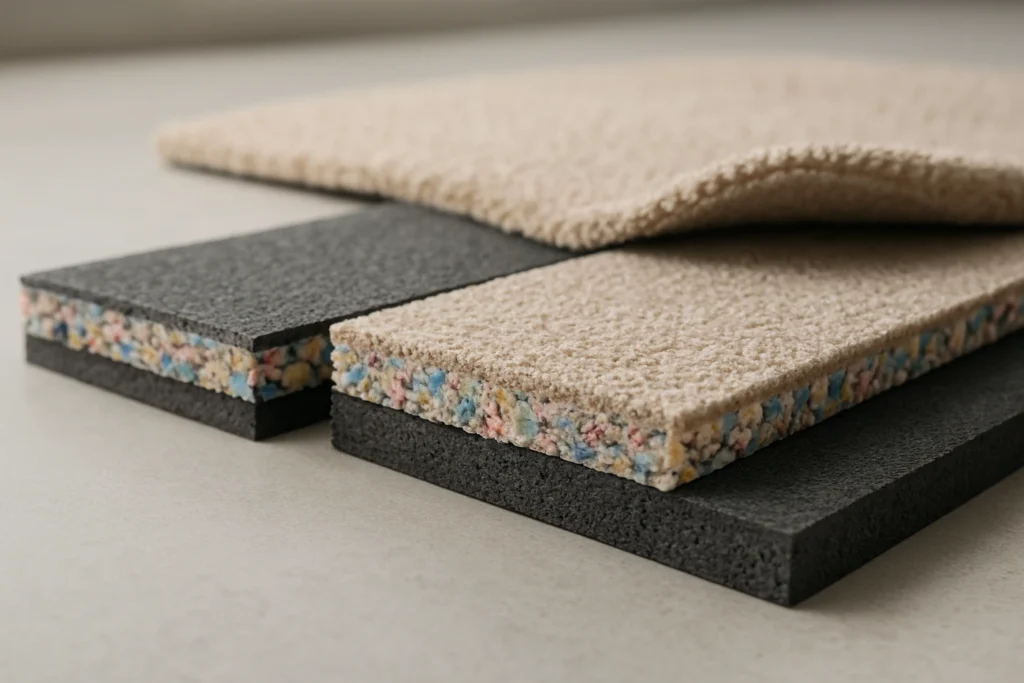
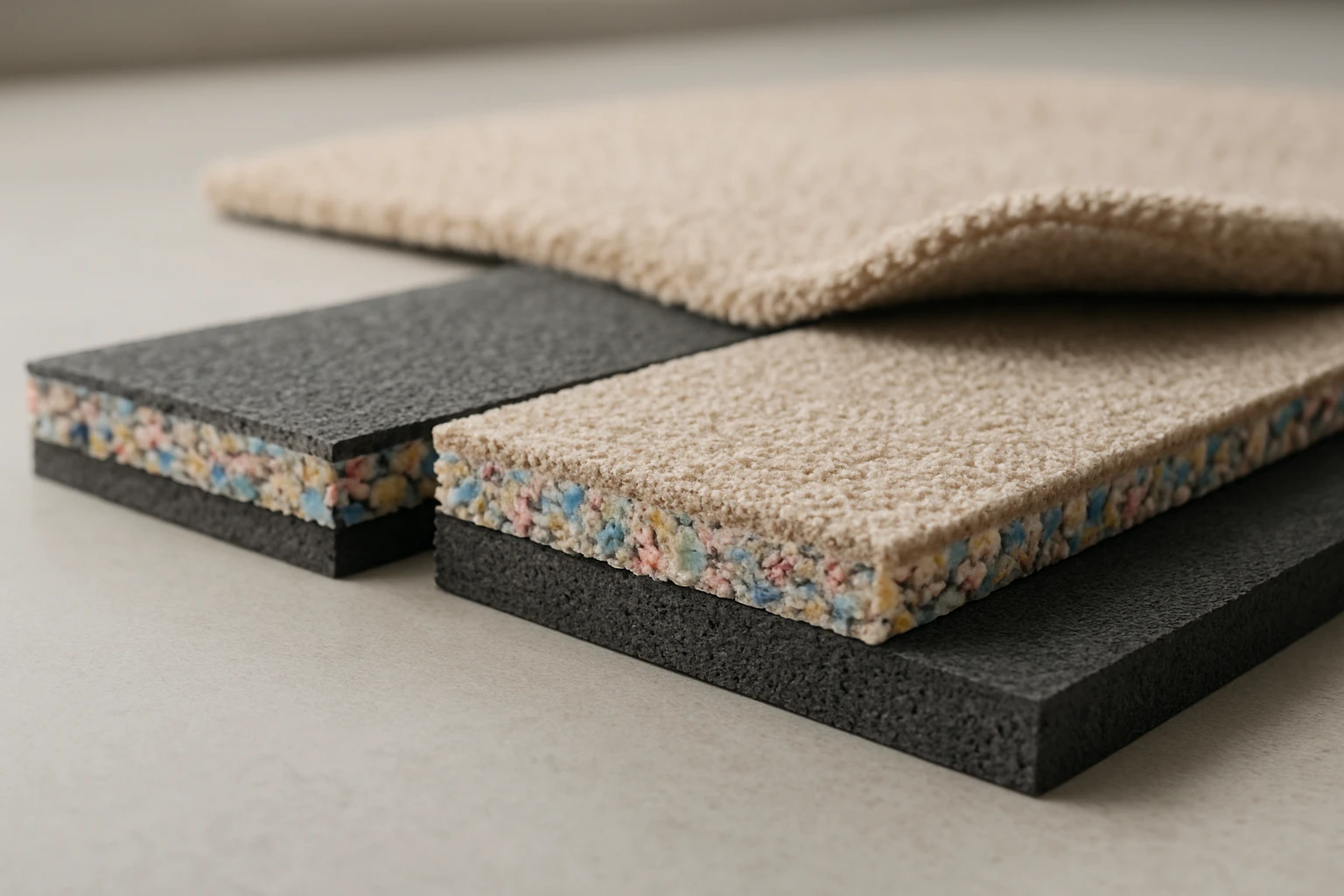
Carpet underlay thickness commonly falls between about 6 mm and 12 mm, and 8 mm to 10 mm is a useful starting point for many domestic carpets. A bedroom where you want a softer floor may suit 10 mm to 12 mm, while stairs and busy spaces often need a thinner, firmer product. The carpet maker’s limits come first because density, backing type and fitting method matter as much as thickness.
What Carpet Underlay Thickness Should You Choose?
Choose the thinnest underlay that gives you the comfort you want while meeting the carpet maker’s support requirements. More thickness is not always better, and some carpet backings need much less movement than others.
The table below gives practical starting points, not fitting specifications. Product ranges overlap, so choose an underlay approved for the carpet and room rather than buying by millimetres alone.
| Underlay Thickness | Where It May Suit | Main Trade-Off |
|---|---|---|
| Around 3 mm to 5 mm | Specialist low-profile or bonded systems | Less floor height, but only suitable where the full system allows it |
| Around 6 mm to 8 mm | Stairs, firm floors and some busy areas | Less cushioning, with potentially better stability when the product is suitably firm |
| Around 8 mm to 10 mm | Many bedrooms, lounges and general domestic rooms | A useful balance of cushioning and support |
| Around 10 mm to 12 mm | Bedrooms and comfort-focused rooms where approved | A softer feel, but more door-clearance and carpet-movement concerns |
| More Than 12 mm | Only systems that specifically allow it | Extra height and movement may outweigh any comfort gain |
For a typical home, compare approved 8 mm and 10 mm samples beneath the same carpet before trying anything thicker. A dense 8 mm product may feel more supportive than a soft 12 mm one, especially when you turn on your heel.
When discussing options with Dubai Carpet Hub, ask for the carpet’s permitted underlay thickness and grade alongside the sample. A carpet underlay specification should describe its intended use, not just its depth.
How Room Use Changes the Right Thickness
Bedrooms can often use a more cushioned underlay, while stairs and busy rooms usually need firmer support. Choose for the way people move through the space, not simply how soft the floor feels when you stand still.

Bedrooms and Living Rooms
For bedrooms, an approved 10 mm to 12 mm underlay can give a cushioned feel underfoot. A thinner carpet or a door with little clearance may make an 8 mm to 10 mm product the better choice.
A living room carpet needs a balance between comfort and support because people walk along the same routes and turn near sofas. Start by comparing firm 8 mm to 10 mm products, then check whether a thicker option is suitable for the carpet backing.
Place the carpet sample over the underlay on a hard surface when testing it. Pressing a bare foam sample between your fingers tells you little about how the finished floor will feel.
Stairs, Landings and Hallways
For stair carpet, a firm product around 6 mm to 8 mm can be a sensible starting point, but some approved stair underlays are thicker. The manufacturer’s stair-use rating matters more than a fixed thickness rule.
The stair nosing, which is the front edge of the step, takes repeated pressure. Too much softness beneath the carpet allows extra bending and movement at that edge, which can strain the backing and spoil the fit.
Use the same underlay specification across the staircase unless the fitting instructions say otherwise. Mixing leftover pieces of different depths can create uneven support, even when the carpet hides the joins.
Offices, Carpet Tiles and Specialist Carpets
For office carpet, desk chairs and frequent foot traffic make support especially important. A soft domestic underlay can make chair wheels harder to move and allow too much carpet movement, so use a product rated for the intended commercial setting.
Many carpet tiles are designed to sit directly on a prepared floor with the specified adhesive or tackifier. They should not be placed over loose domestic foam unless the manufacturer has approved that system.
Some sisal carpet products and specialist mosque carpet systems also have their own backing and fitting requirements. Confirm those before adding a separate cushioning layer, especially where firm footing or access for wheelchairs and trolleys matters.
Why Density Matters as Much as Thickness
Thickness measures the depth of an underlay, while density measures how much material is packed into a given volume. Two products of the same thickness can feel very different and spring back differently after pressure.
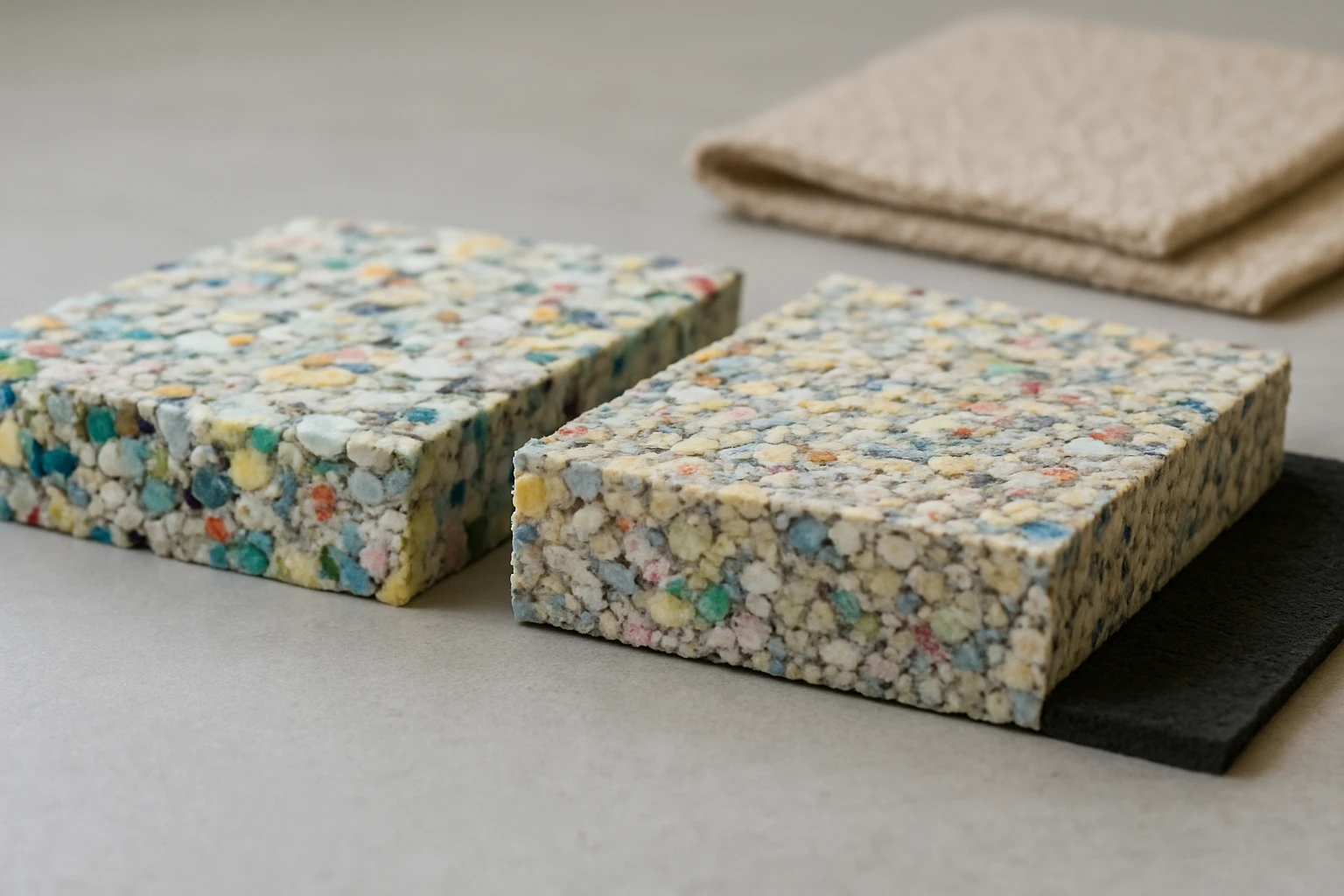
For foam underlay, density is often listed in kilograms per cubic metre, written as kg/m³. That figure helps you compare similar foam products, but it does not tell you everything about firmness or how well the product springs back after being compressed repeatedly.
Do not compare rubber and foam using density alone. Their structures differ, so a higher number does not automatically mean a better underlay for your carpet.
| Material | What Thickness Alone Misses | What to Check Before Buying |
|---|---|---|
| Rebonded Polyurethane Foam | Foam mix, firmness and recovery vary between products | Density, room-use rating and carpet compatibility |
| Rubber | Dense rubber and sponge rubber behave differently | Product construction, load rating and heating suitability |
| Felt or Fibre | A firm feel does not prove suitability for every backing | Approved carpet types and installation method |
| Combined Felt and Rubber | Each layer has a different role | Full product specification rather than overall depth alone |
A common mistake is choosing the thickest underlay to protect a thin carpet. If the underlay allows too much movement, the carpet backing can flex more with each step, which may put extra strain on seams and the fitted edges.
The better choice is usually a well-matched pair. For a fully fitted floor, compare the carpet and underlay together using the guidance in best carpet underlay for wall-to-wall carpets, rather than buying each layer separately.
How to Check Floor Height Before Ordering
Check the total finished floor height before choosing underlay thickness. The underlay, carpet and any floor preparation all take up space, while doors and thresholds offer a fixed amount of clearance.

A door that clears the bare floor may still catch the new carpet. Thick pile can brush against the door even where the backing sits below it, so adding the thicknesses listed in a catalogue is only a first check.
- Measure from the prepared floor. Remove old layers or account for them correctly, and include any planned floor levelling.
- Check the whole door swing. The tightest point may be away from the doorway if the floor slopes or the door drops slightly.
- Add the proposed layers. Include the underlay and carpet, using supplier guidance on the installed carpet height.
- Test a sample stack. Place the actual samples beneath the door where practical, but do not treat a compressed sample as an exact final measurement.
- Check adjoining floors and trims. The transition strip must suit the height difference and fitting method.
For example, a proposed 10 mm underlay beneath a carpet about 9 mm thick adds up to 19 mm before other preparation. A 17 mm door gap is a warning that you need to review the combination, not a reason to assume the carpet will squash enough to fit.
Ask the fitter to confirm the gripper height too. Gripper is the narrow strip with pins that holds stretched carpet around the room, and it must suit the chosen floor system.
For wall-to-wall carpet, settle these details before ordering. Do not trim a fire-rated door without approval, because changing it can affect its fire performance.
Underfloor Heating, Sound and Dubai Floor Conditions
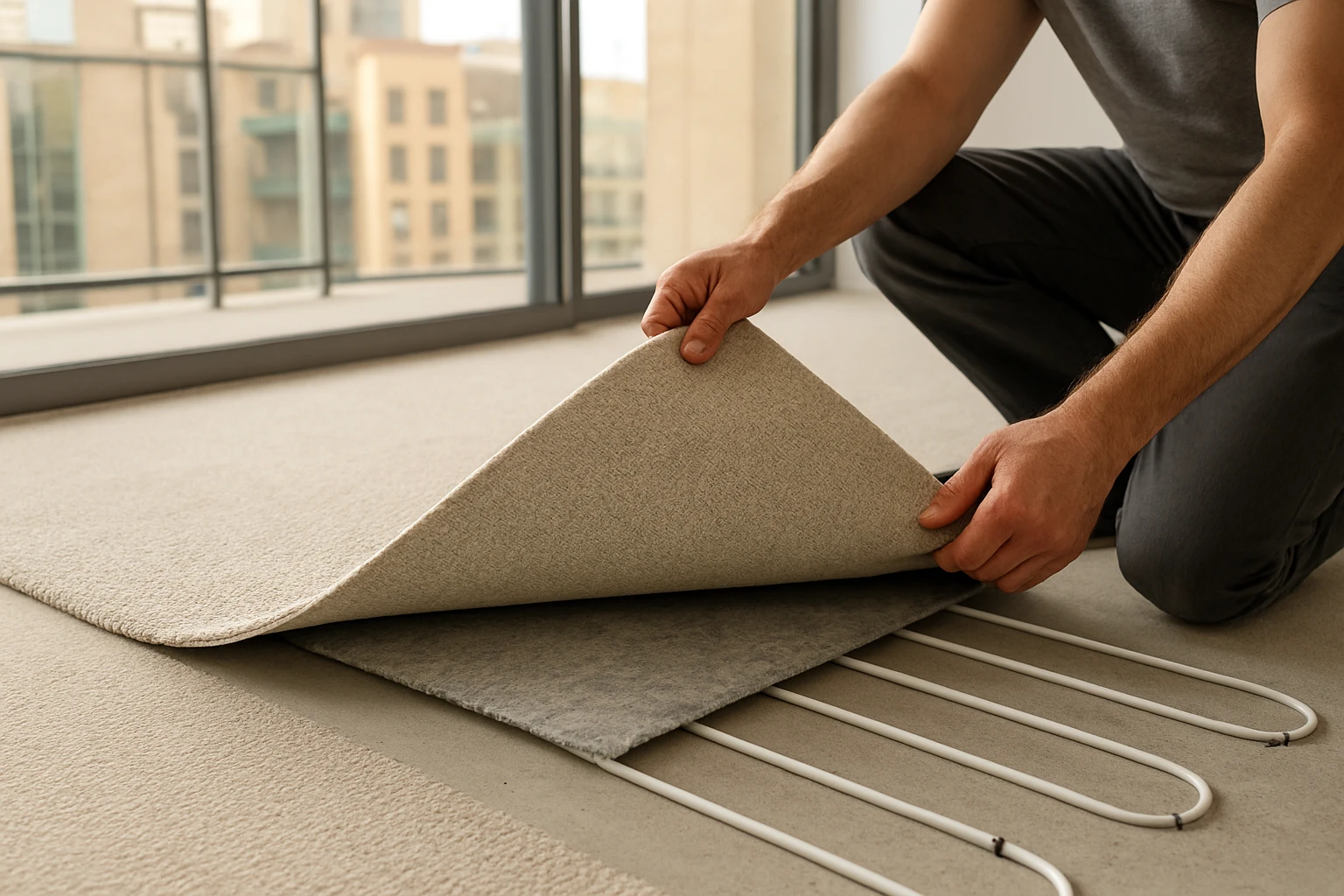
Underfloor heating needs a carpet and underlay combination with a suitable combined heat-resistance rating. For sound reduction or moisture concerns, choose by tested performance and floor condition rather than thickness alone.
Underfloor Heating
Tog is a measure of resistance to heat flow, and a lower tog value lets heat pass through more easily. Add the carpet and underlay ratings together, then compare that total with the heating system’s limit.
As an example, a carpet rated at 1.4 tog and an underlay rated at 0.7 tog give a combined 2.1 tog. That calculation does not prove suitability on its own because the heating system may set a different limit or require specific products.
Many heating suppliers use 2.5 tog as a maximum combined rating, but this limit does not apply to every system. Follow the heating supplier’s and flooring manufacturer’s written limits, including any surface-temperature limit, rather than choosing a thin product and assuming it will work.
Sound Reduction in Apartments
A thicker underlay is not automatically the best choice for reducing footstep noise in the room below. Look for an impact sound test result for the complete floor system, and check whether the tested layers resemble your own floor.
A laboratory result for an underlay beneath one carpet on concrete does not promise the same result beneath another carpet on timber. Dubai apartment buildings may also have flooring approval rules, so check with building management before relying on a product’s sound claim.
Moisture Beneath the Carpet
In Dubai homes, chilled rooms, humid outdoor air and moisture within concrete can complicate a carpet installation. A floor that feels dry at the surface may still need a moisture check before fitting, especially over new screed or a slab with a history of damp.
Thicker underlay does not fix damp, and a foil backing should not be treated as a moisture-control system unless it is specified for that purpose. Have the floor assessed before covering it if there are damp smells, staining or signs of moisture.
What to Confirm Before Buying Carpet Underlay
Buy carpet underlay by its approved use, firmness and thickness together. For many domestic rooms, an approved 8 mm to 10 mm product is a sensible starting point, but the final choice must suit the carpet and the floor beneath it.
Ask the supplier to put these details on the quote or product sheet:
- The exact underlay name, thickness and material.
- Its intended room-use rating, including stair or commercial use where needed.
- The carpet maker’s permitted underlay specification.
- Density and details of how it performs under pressure, where supplied.
- The combined tog rating where underfloor heating is present.
- The fitting method, floor preparation and any door or threshold work.
In Dubai quotes, compare like-for-like installed costs in AED per square metre. One price may include removing old underlay and preparing the floor, while another covers the material only. The carpet underlay price guide for Dubai explains the cost items worth checking.
If a quote uses the word padding instead of underlay, confirm the actual product rather than assuming it is a different layer. The comparison of carpet padding vs underlay explains how those terms are used.
The right carpet underlay thickness should give you the feel you want without making the carpet unstable or the floor too high. If two products both meet the carpet specification, choose between them by testing each beneath a carpet sample rather than relying on the thickness number alone.
Frequently Asked Questions
Can I Put New Carpet Underlay Over Old Underlay?
Do not put new carpet underlay over old underlay unless the flooring manufacturer specifically approves that build-up. Two layers can move against each other and create uneven support, while worn areas underneath remain hidden. Remove the old layer so the fitter can inspect the floor and install one suitable underlay.
How Can I Measure the Thickness of My Existing Underlay?
Measure an exposed edge of the underlay with a ruler or calliper without squeezing the material. Check several spots because busy routes may be compressed while edges remain closer to their original depth. Avoid lifting fitted carpet yourself if it could damage the backing or disturb the stretched fit, and keep clear of gripper pins.
Does Thicker Underlay Stop Furniture Dents in Carpet?
Thicker underlay does not reliably prevent furniture dents because both the carpet pile and the underlay can compress under a lasting load. Suitable furniture cups can spread the weight, but they may not prevent marks completely. Choose underlay for support and recovery rather than expecting extra depth to protect against heavy furniture.
Can Carpet Underlay Be Used Beneath Laminate Flooring?
Ordinary carpet underlay should not be used beneath laminate unless the laminate manufacturer explicitly approves it. Carpet underlay is often too soft, which can let the boards move and strain their joints. Laminate needs its own specified underlay, with moisture protection where the floor construction requires it.
Is Carpet Underlay the Same as a Rug Pad?
Carpet underlay and a rug pad serve different fitting needs and should not be treated as interchangeable. Fitted carpet underlay sits beneath a secured carpet, while a rug pad must suit both the loose rug and the finished floor beneath it. Choose a floor-safe rug pad that helps control slipping without marking the surface.