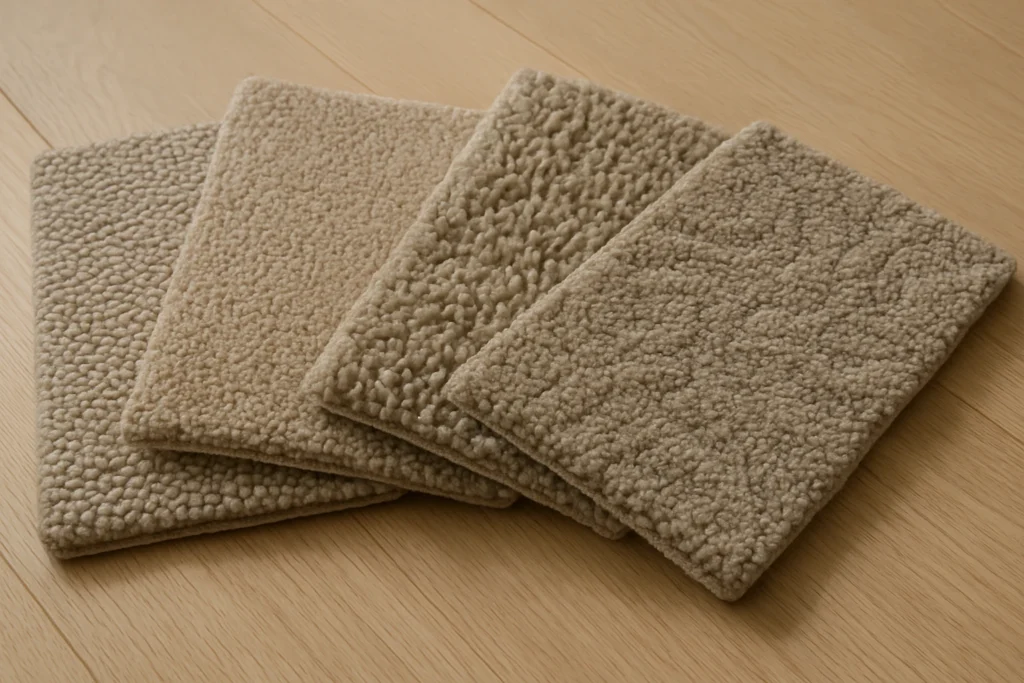
Carpet pile types fall into three main groups: cut pile, loop pile, and cut-and-loop pile. Cut pile has exposed yarn ends for a softer feel, loop pile keeps the yarn in loops for a firm surface, and cut-and-loop combines both to form patterns. Choose the construction first, then compare pile height, yarn density, and fibre, because a deep carpet is not always the most durable.
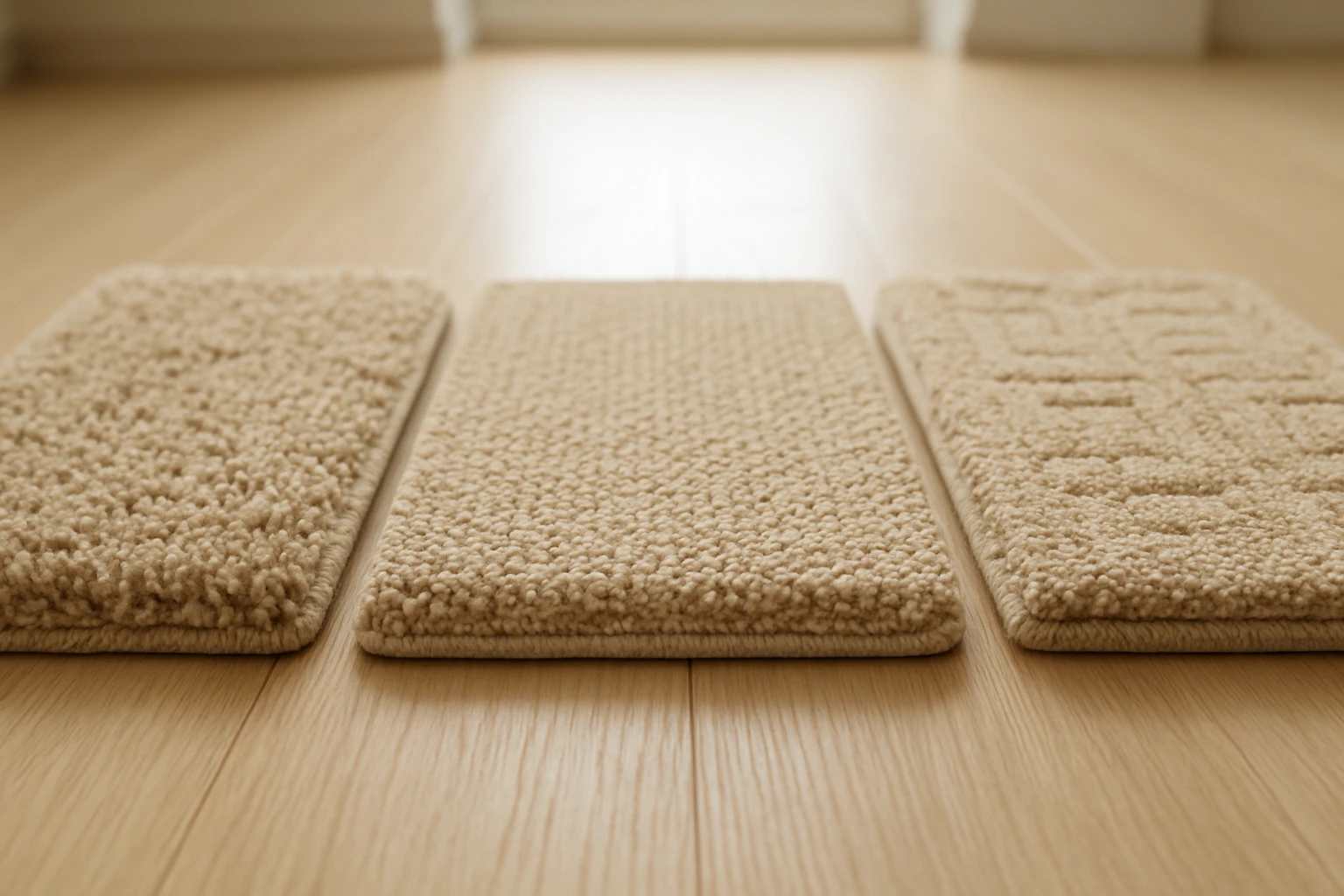
What Does Carpet Pile Mean?
Carpet pile is the layer of yarn that stands above the backing and forms the surface you walk on. The way that yarn is cut, looped, twisted, and packed together affects how the carpet feels and wears.
A carpet label can describe several things at once. For example, a carpet might be nylon, cut pile, textured, and low pile. Nylon names the fibre, cut pile describes the yarn structure, textured describes the finish, and low pile describes its height. These are separate features, not competing carpet types.
When comparing samples from Dubai Carpet Hub, start with the surface structure rather than colour alone. Two beige carpets may look alike from across a showroom but wear quite differently beneath a dining chair or along a busy hallway.
There is also a difference between pile and weave. Some flatwoven floor coverings, including many sisal carpets, have a woven surface rather than a raised pile. They belong in a separate comparison, even when a shop displays them beside loop pile carpet.
The Main Carpet Pile Types Compared
Cut pile, loop pile, and cut-and-loop describe how the yarn forms the carpet surface. Names such as plush, Saxony, frieze, and Berber describe more specific styles, although shops sometimes use those names differently.
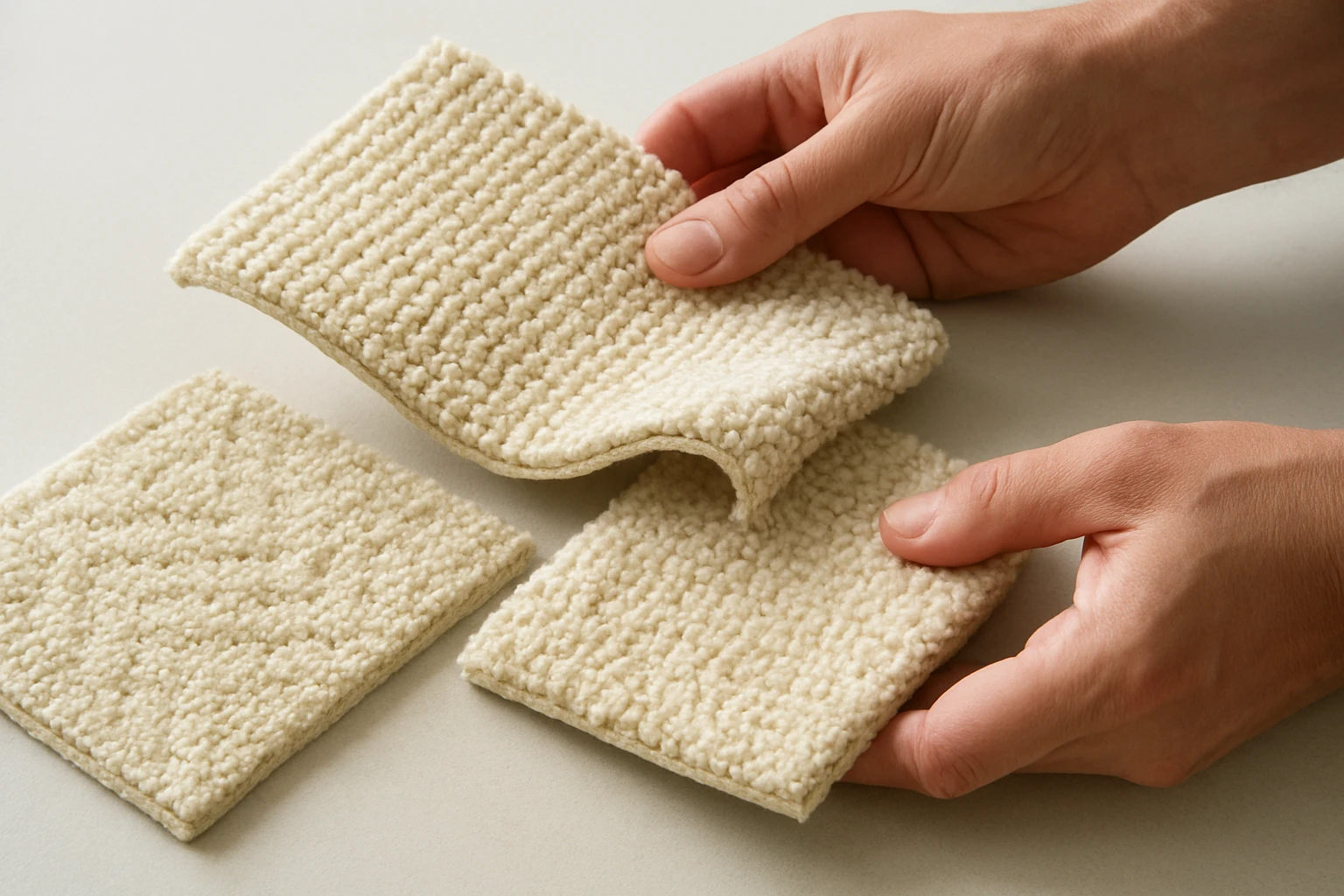
| Pile Style | What the Surface Looks Like | Where It Often Works Well | Main Trade-Off |
|---|---|---|---|
| Plush or Velvet | Short, closely packed cut ends with a smooth finish | Quiet bedrooms and formal rooms | Shows footprints, vacuum tracks, and changes in shade |
| Saxony | Upright cut yarn with a soft, full appearance | Bedrooms and lower-traffic living spaces | Smooth versions show marks and flattened paths |
| Textured Cut Pile | Cut yarn with varied direction and a less even finish | Family rooms and everyday bedrooms | Hides some marks but still needs good density and resilient fibre |
| Twist or Frieze | Tightly twisted cut yarn, often leaning or curling | Busy living spaces and informal rooms | Longer versions can trap grit and resist chair movement |
| Shag | Long, loose cut yarn with a deep surface | Low-traffic comfort areas | Harder to clean and easier to flatten or tangle |
| Level Loop | Uncut loops of similar height | Halls, work areas, and busy rooms | Loops can catch claws or sharp objects |
| Multi-Level Loop | Loops of different heights forming a pattern | Rooms needing texture without a deep pile | Raised loops can snag, and the texture may hold dirt |
| Cut-and-Loop | Cut ends mixed with intact loops | Patterned living spaces and bedrooms | Raised details may wear differently from lower areas |
Cut Pile: Plush, Saxony, Textured, and Frieze
Cut pile carpet has yarn loops that are cut open, leaving exposed ends at the surface. Those ends can form a smooth, upright finish or a more relaxed texture, depending on the yarn and how tightly it is twisted.
Plush and velvet carpets have an even surface that gives a room a neat, soft look. That smooth finish also makes changes in pile direction easy to see. A footprint bends the yarn and changes how it reflects light, so a dark patch is not always dirt or damage.
Saxony is usually fuller, with upright yarn tufts. Textured Saxony uses less uniform yarn direction to make everyday tracks less obvious. Product names overlap, so look at the sample rather than treating the label as a fixed quality grade.
Twist carpet uses yarn twisted tightly enough to help the tufts keep their shape. Frieze is a strongly twisted cut pile whose yarn often curls at the tips, which breaks up the surface and helps disguise footprints. A dense, shorter twist is often a more practical family choice than a long, loose style, even if the long sample feels softer in your hand.
Shag has a deep surface of long, loose cut yarn. It can feel comfortable in a quiet sitting area, but it is a poor match for rolling chairs, frequent food spills, or a household that needs quick vacuuming.
Loop Pile: Level Loop, Multi-Level Loop, and Berber
Loop pile carpet keeps the yarn loops intact, creating a surface that can resist flattening well when the loops are short and closely packed. Level loop has a more even surface, while multi-level loop uses different loop heights to create texture or a pattern.
Berber is often used as a retail name for loop pile, especially chunky or flecked styles. The name does not guarantee a particular fibre, loop size, or wear rating, and not every loop carpet performs the same way.
Small, tight loops usually give dirt fewer deep spaces to settle into than large, open loops. Large loops can also catch on a pet’s claw, a sharp furniture edge, or a vacuum attachment. A pulled loop may draw yarn from nearby stitches, so do not tug at a loose strand.
For pets that scratch or knead the floor, a dense cut pile may be a safer choice than a chunky loop. Loop pile can still work in a home with pets, but claw habits matter more than a general claim that all loop carpet is pet-friendly.
Cut-and-Loop Pile: Pattern with a Practical Trade-Off
Cut-and-loop carpet combines exposed yarn ends with intact loops to create a pattern in the surface. Some patterns are subtle, while others have clear raised and recessed areas.
This texture can make small marks less obvious, but it does not make the carpet stain-proof or wear-proof. Along a busy path between a door and a sofa, raised cut sections may flatten before the lower loops show much change.
Choose a lower, less dramatic pattern for a heavily used room. For a quiet bedroom, a deeper pattern may be worth the extra care because appearance and softness matter more than heavy daily wear.
Low, Medium, and High Pile Are Height Choices
Pile height is the distance from the backing to the tip of the yarn, not the total thickness of the carpet. Low, medium, and high pile describe height, while cut and loop describe construction, so a carpet can be both low pile and cut pile.
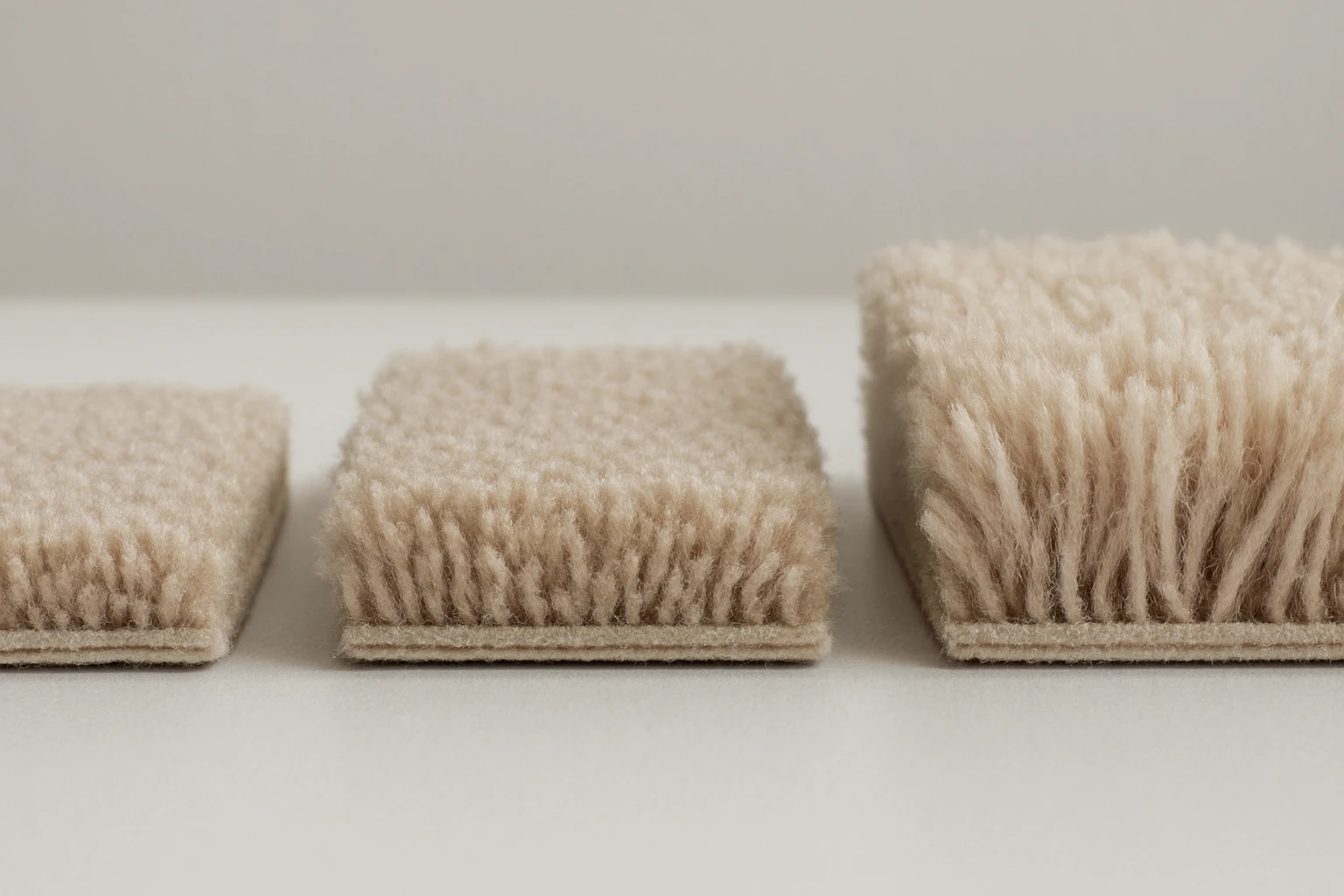
Suppliers do not all use the same height limits for these categories. As a rough shopping guide, low pile is often around 6 mm or less, medium pile around 6 to 12 mm, and high pile above roughly 12 mm. Ask for the manufacturer’s actual measurement rather than relying on the category name.
| Height | Main Benefit | Main Limitation | Useful Decision Rule |
|---|---|---|---|
| Low Pile | Easier movement and access for vacuuming | Less deep cushioning underfoot | Start here for desk chairs, dining areas, and busy routes |
| Medium Pile | A balance of softness and daily use | Performance varies with density and fibre | Compare dense samples for bedrooms and family rooms |
| High Pile | A deep, soft feel | More effort to remove trapped dirt and move furniture | Keep it away from rolling chairs and frequent food spills |
A common mistake is measuring from the underside of the backing and calling that pile height. Backing thickness can make a carpet look thick without adding any extra yarn at the surface.
Height also affects door clearance and joins between floor finishes. Before ordering wall-to-wall carpet, check the combined depth of carpet and underlay against the space beneath doors and nearby tile edges. A sample that fits beneath a door on its own may not fit once the underlay is in place.
Why Density, Twist, and Fibre Matter as Much as Pile Type
How well a carpet wears depends on its whole construction, not pile height alone. Short, closely packed yarn can hold its shape better than a deeper surface with large gaps between tufts.

Density describes how closely the yarn is packed. Twist describes how tightly the strands are wound together. Both matter because unsupported or loosely formed tufts can lean over and lose their shape under repeated foot traffic.
Face weight is the weight of the pile yarn over a set area, excluding the backing. It is useful when comparing similar products, but a heavier carpet is not automatically better. Long, loosely packed yarn can weigh more than short, dense yarn, so compare face weight alongside height, fibre, and the rating for its intended use.
Bend a sample gently and look at the spaces between the tufts. This helps you compare two similar carpets, but it is not a pass-or-fail test because bending exposes some backing even in well-made products. Ask for the product details and suitability rating before deciding.
Match the Fibre to the Way the Room Is Used
Wool, nylon, polyester, and polypropylene can all appear in different carpet pile types, and their strengths are not the same. The fibre choice affects how well the yarn springs back, handles stains, and responds to cleaning.
| Fibre | Useful Strength | What to Check |
|---|---|---|
| Wool | Natural spring and a comfortable feel | Approved cleaning methods and protection against moth damage |
| Nylon | Good recovery from repeated foot pressure | The product’s stain treatment and cleaning guidance |
| Polyester | Soft feel and resistance to many water-based stains | Density and suitability for busy routes, since flattening can be a concern |
| Polypropylene | Low moisture absorption and resistance to many water-based stains | Oil-based stains, heat exposure, and recovery after crushing |
For a fuller material comparison, see wool vs nylon vs polyester carpet. A good fibre cannot fully make up for loose construction, just as dense construction cannot remove every limitation of the fibre.
Underlay matters too, but it should support the carpet rather than turn the floor into a soft mattress. Use carpet underlay that meets the carpet maker’s guidance for thickness and firmness. An overly soft layer can allow too much movement beneath a carpet designed for a firmer base.
Which Carpet Pile Type Suits Each Room?
Choose carpet pile based on the toughest demands the room will place on it. Frequent turning, chair movement, claws, and tracked-in grit often matter more than the number of people using the space.

| Room or Use | Sensible Starting Point | What Matters Most |
|---|---|---|
| Main Bedroom | Textured cut pile or Saxony | Barefoot comfort and tolerance for visible tracks |
| Family Living Room | Dense textured cut pile or short twist | Recovery from foot traffic and ease of vacuuming |
| Hallway | Tight, low loop or dense short cut pile | Resistance to repeated wear along a narrow path |
| Stairs | Dense, low-profile carpet approved for stairs | Secure fitting, edge appearance, and suitable underlay |
| Home Office | Firm low pile with a suitable chair mat where needed | Chair movement and the product’s castor-use rating |
| Commercial Office | Commercial low loop or suitable low cut pile | Documented commercial suitability and maintenance needs |
| Pet Household | Dense low or medium cut pile | Claw behaviour, hair removal, and cleaning instructions |
| Prayer Area | Dense, even pile designed for the setting | Comfort, stability, repeated use, and easy care |
For a living room carpet, think about the route people walk rather than the empty floor area. A room used by two people can still develop a worn strip if every trip crosses the same narrow gap beside the sofa. The guide to carpet for high-traffic areas explains how fibre and construction work together in those spots.
Stairs need more than a general claim of durability. When stair carpet bends over the front edge of a step, gaps in the pile may become more visible. Check a sample bent over a similar edge, and confirm that the maker approves the carpet for stairs.
For office carpet, choose a product rated for the actual setting, especially where chairs roll across it all day. Carpet tiles can make it easier to replace a small damaged area, but tiles are a format, not a pile type. They can have loop, cut, or mixed surfaces.
A mosque carpet needs an even, stable feel for repeated kneeling as well as a suitable wear rating. A very deep pile may feel soft in a hand sample but offer less stable support during use.
In Dubai homes, fine sand carried in from entrances and balconies makes it wise to plan for cleaning before you buy. Use a good entrance mat, and favour a pile your vacuum can clean well. A deep surface that holds grit near the backing can suffer wear as people walk over it.
Do not assume a pile style is suitable for outdoor use. Outdoor carpet needs fibres, backing, drainage, and sun resistance suited to the location. An indoor low-loop carpet is not an outdoor product just because it looks tough.
How to Check a Carpet Sample Before You Buy
Test a carpet sample for the way you will live with it, not just how soft it feels in your palm. Looking at the sample on the floor, under your own lighting, often reveals more than handling it upright in a showroom.

- Put the sample on the floor. View it from the doorway and beside a window, because pile direction and light can change its apparent shade.
- Brush the surface both ways. If the change between light and dark bothers you, a textured cut pile or loop may suit you better than smooth plush.
- Press and release the yarn. Watch how the tufts respond, but remember that a brief hand test cannot predict years of use.
- Check the edges and backing. Ask for pile height, fibre content, use rating, and the recommended fitting method rather than judging quality by thickness alone.
- Confirm care requirements. Check that your vacuum and any cleaning service you plan to use are suitable for the pile.
- Ask for a full written quote. Compare carpet, fitting, underlay, preparation, and waste on the same basis. A price per square metre alone does not show the installed cost.
For example, suppose you are choosing between a deep polyester Saxony and a shorter nylon twist for a family room beside a busy entrance. If easy care and recovery from foot traffic are your priorities, the dense nylon twist is a sensible starting point, provided its use rating fits the room. For a quiet bedroom where softness matters most, the Saxony may be the better fit.
Measuring is a separate task from choosing the surface. Use the guide to calculating carpet area to work out the room size, then have the installer check roll width, seams, and pattern matching before the order is final.
Check How the Pile Must Be Cleaned
The right vacuum setting depends on the carpet, not just the vacuum’s power. Strong suction can make a deep carpet hard to clean, while some rotating brush settings can catch loose loops or damage delicate yarn.
Follow the carpet maker’s instructions for suction, brush use, and head height. If the vacuum is hard to push, do not force it across the surface. Check the settings and approved equipment first.
Blot spills rather than rubbing them, because rubbing can spread the spill and disturb the yarn. Never pull a snagged loop, and ask the supplier or a carpet repair specialist how to handle it. A flattened furniture mark is also different from a stain, so cleaning alone may not restore the pile.
For most busy homes, a dense low or medium textured cut pile is a useful place to start. Tight loop pile suits firm, practical floors when snagging is unlikely, while smooth plush and deeper styles make more sense where softness matters more than hiding tracks or speeding up cleaning.
Frequently Asked Questions
Is Cut Pile or Loop Pile Better for Allergies?
Neither cut pile nor loop pile is automatically better for allergies, because cleaning, moisture control, and the person’s triggers matter more than the pile name. A short, accessible surface may be easier to vacuum well than deep shag. For a diagnosed allergy, ask a clinician about flooring choices and check any product claims against recognised testing.
Does New Carpet Shedding Mean the Pile Is Faulty?
Some shedding can be normal in a new carpet made with short fibres, especially wool, and does not by itself mean the pile is faulty. Follow the maker’s vacuuming guidance rather than brushing the surface hard. Bare patches, loose tufts, or shedding that remains heavy should be raised with the supplier.
Why Does My Carpet Look Like Two Different Colours?
Carpet can look like two colours when the pile leans in different directions and reflects light differently. This is especially visible on smooth cut pile and does not always mean the carpet is stained. If an unexpected patch remains, ask the supplier to check whether it is shading, pile reversal, soiling, or a fitting issue.
Can Carpet Pile Direction Affect Visible Seams?
Yes, carpet pile direction can make a seam more visible if adjoining pieces reflect light differently. Installers normally plan adjoining pieces with the pile running in the same direction, subject to the product’s fitting instructions. Room shape, roll width, pattern matching, and light from windows also affect where seams should go.
Is High-pile Carpet Always More Expensive Than Low Pile?
High-pile carpet is not always more expensive than low pile, because fibre, yarn density, backing, and product grade also affect the price. A dense commercial low-pile carpet can cost more than a loose high-pile style. Compare installed quotes for products suited to the same use, rather than treating height as a price or quality scale.