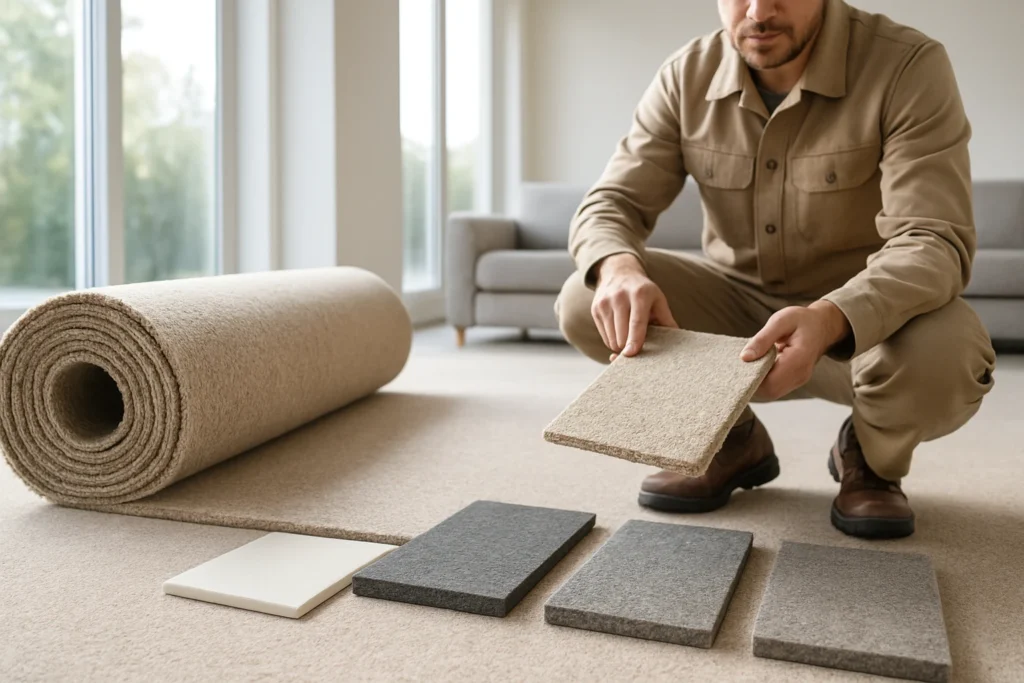
The best carpet underlay for wall-to-wall carpets cushions the carpet, evens out the floor, cuts noise and improves insulation, so the carpet lasts longer and feels nicer underfoot. Pick an underlay with the right thickness and density for your room and carpet, and check the carpet maker’s recommendations for warranty and compatibility. For local advice on matching underlay to specific wall-to-wall carpet options, Dubai Carpet Hub suggests testing a small area before you buy.
Key Statistics
- Typical underlay thickness for wall-to-wall carpets: 3 mm to 10 mm, with 6 mm to 8 mm most common.
- A correct underlay can increase carpet life by about 30% to 50% in everyday use.
- Dense underlay may reduce impact noise by roughly 20% to 35% depending on floor construction.
How to Choose the Best Carpet Underlay
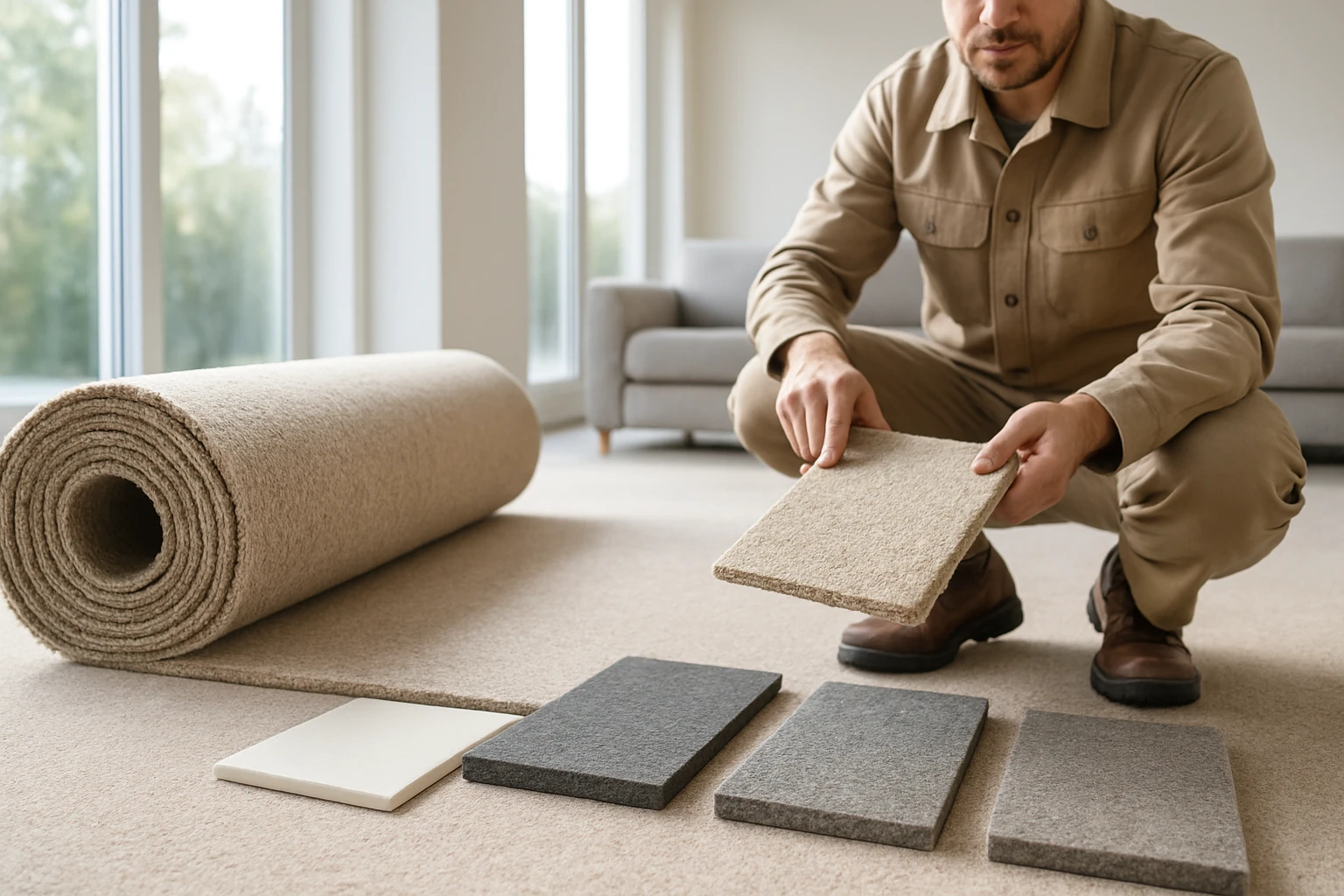
Start by matching the underlay to the carpet pile, room use and subfloor. A soft, thick underlay feels great in low-traffic bedrooms but will wear faster under heavy furniture. A firmer, high-density underlay often works better in living rooms and home offices because it supports foot traffic and furniture.
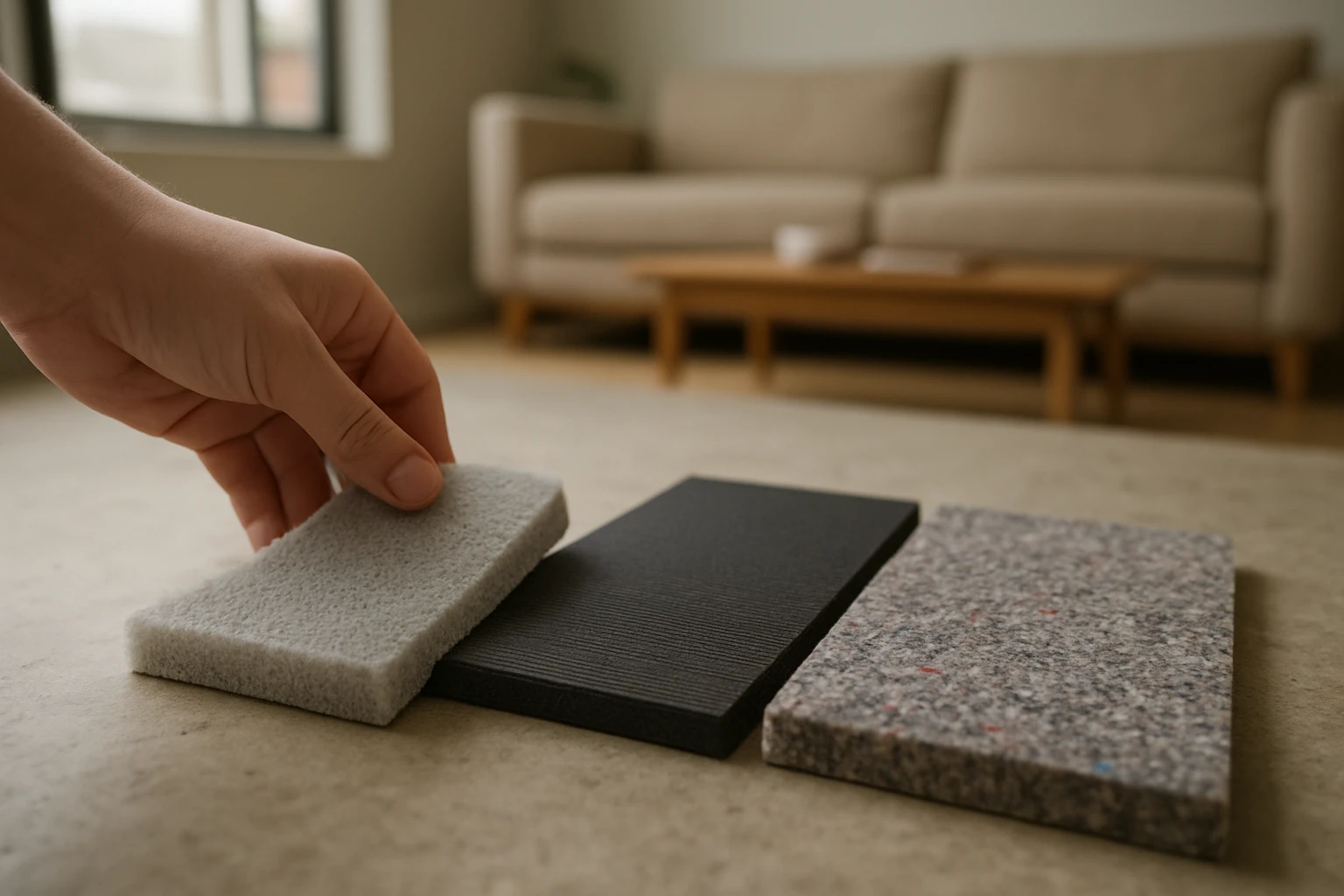
Key points to compare when you choose:
- Density: higher density means stronger support and a longer life. Look for a density rating from the maker.
- Thickness: too thin gives poor comfort, too thick can cause instability at doorways. For wall-to-wall, 6 mm to 8 mm is often a good balance.
- Material: foam, rebond felt, crumb rubber and synthetic fibers each behave differently, so match the material to the room and use.
- Compatibility: some carpets, especially woven and natural-fiber types, need specific underlay types for the carpet warranty to remain valid.
Asking the carpet supplier which underlay they recommend solves many matching problems fast. Also, if you need wall-to-wall installation guidance, see How to Install Wall-to-Wall Carpets Step by Step for Homes and Offices.
Top Underlay Types Compared
Most underlay choices fall into a few broad groups. The table below compares their typical use, life expectancy and price range so you can choose faster.
| Underlay Type | Typical Thickness | Best For | Typical Lifespan | Approx Price Range per m2 |
|---|---|---|---|---|
| Rebond Felt | 6–12 mm | Living rooms, bedrooms, stairs | 8–15 years | Low to Medium |
| Foam (PU) | 3–9 mm | Soft underfoot bedrooms | 4–8 years | Low |
| Dense Rubber | 3–8 mm | Heavy traffic, commercial floors | 10–20 years | Medium to High |
| Crumb Rubber | 5–10 mm | Stairs, high wear areas | 8–15 years | Medium |
| Fibre (Natural or Synthetic) | 6–12 mm | Eco-concerned homes, insulation | 6–12 years | Medium |
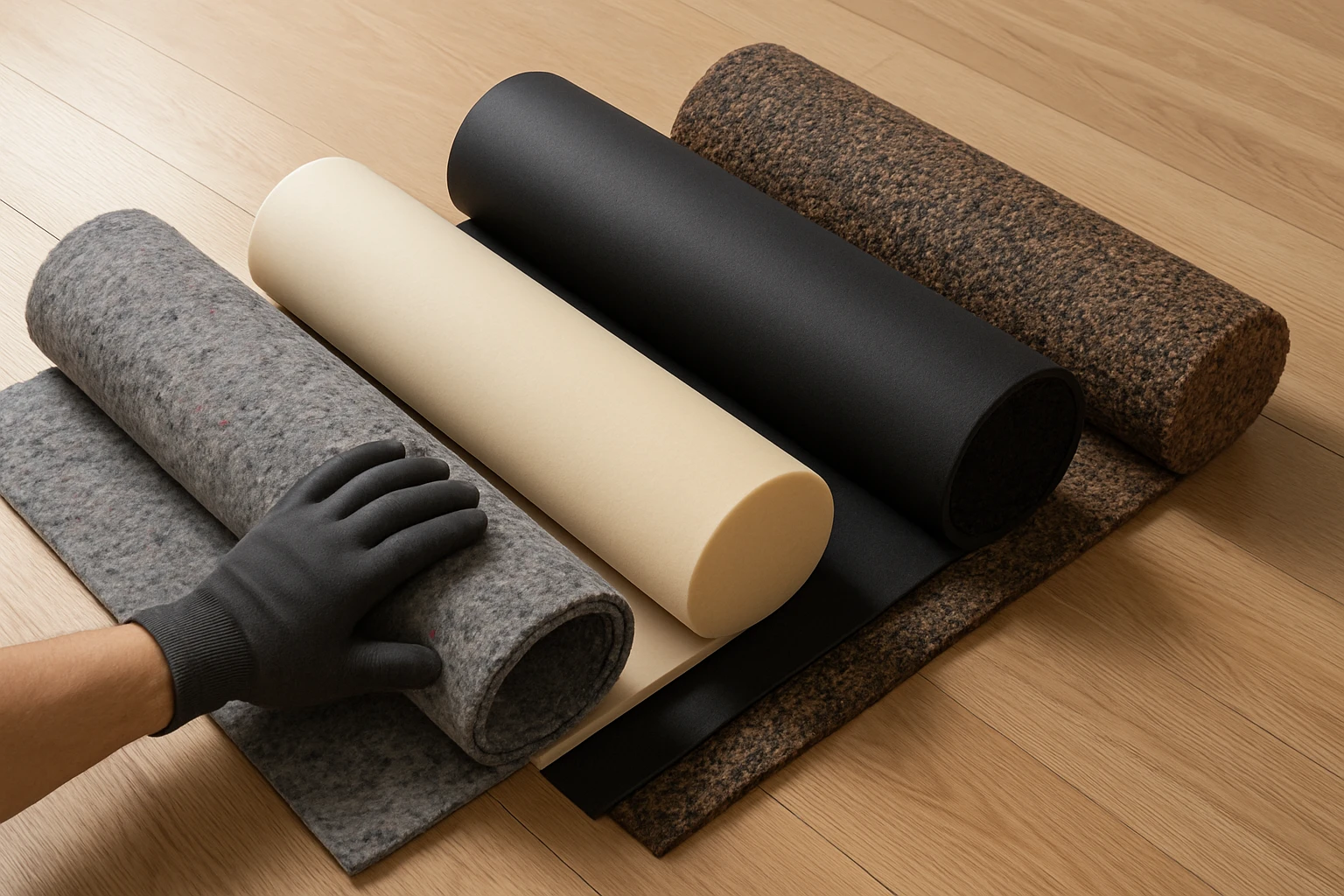
Rebond Felt
Best For:
Living spaces and stairs where a balance of comfort and durability matters.
Pros:
Good cushioning, stable underfoot and long lasting under moderate traffic.
Cons:
Can be thicker and harder to fit under doors and may absorb spills if not protected.
Foam Underlay
Best For:
Bedrooms where a soft feeling is a priority and traffic is light.
Pros:
Very soft and warm and inexpensive.
Cons:
Lower density wears faster and may compress under heavy furniture.
Dense Rubber
Best For:
High-traffic living rooms and commercial spaces where support matters.
Pros:
Excellent support, long life and better acoustic performance.
Cons:
Heavier and pricier and may need specific adhesives or fixing methods.
Crumb Rubber
Best For:
Stairs and areas with concentrated wear and where bounce-back is needed.
Pros:
Very resilient and supportive under point loads.
Cons:
Can have an odor at first and may be less eco-friendly than fiber options.
Thickness Density and GSM Explained
Three numbers matter: thickness in millimeters, density in kg/m3 or a maker rating, and GSM for fibre underlays. Together they tell you how the underlay will feel and how long it will last.
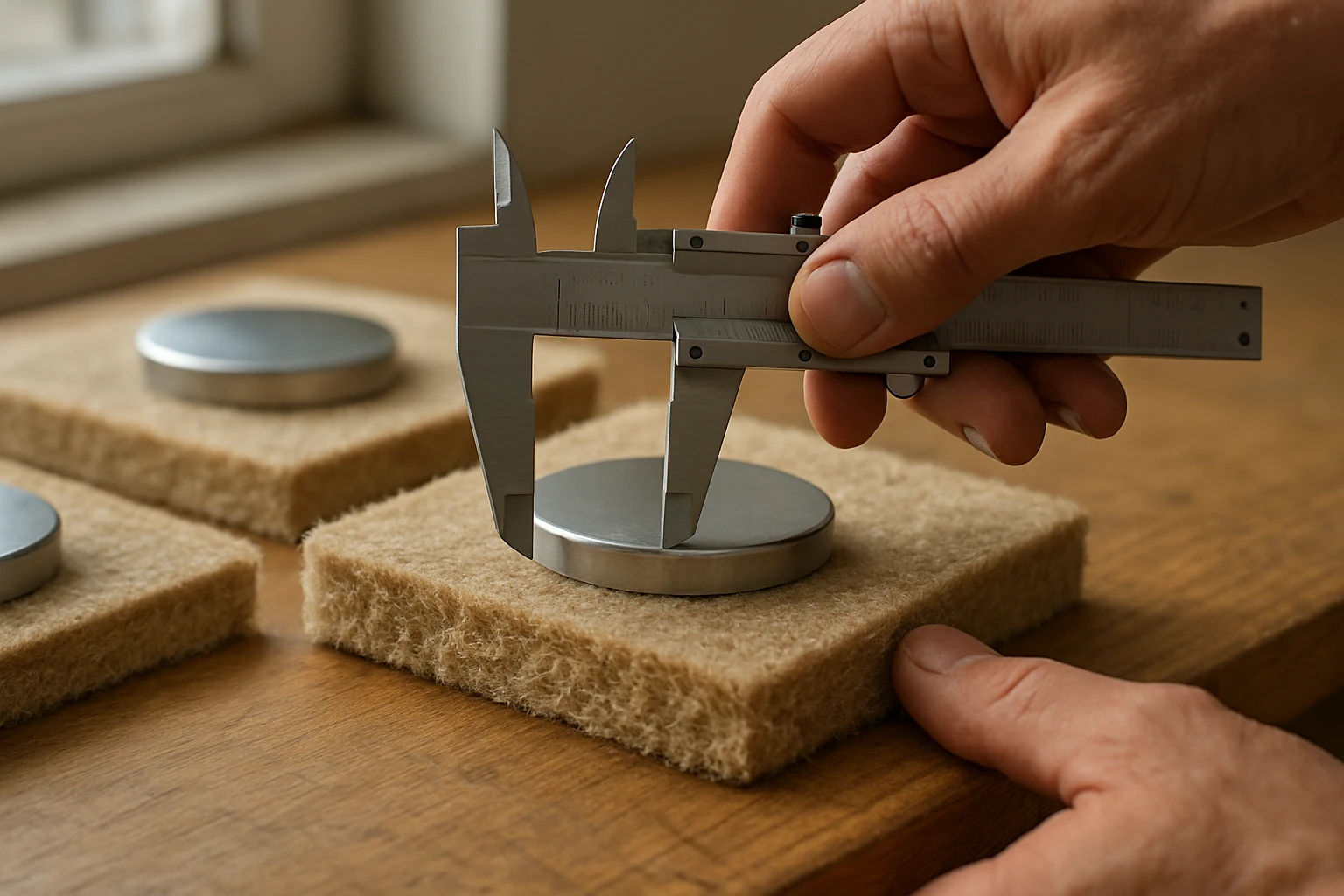
Practical rules to follow:
- For plush residential carpets choose 6 mm to 8 mm with medium density.
- For low-pile commercial carpets choose 3 mm to 6 mm with high density.
- For stairs choose denser material even if the thickness is lower, because edges take more wear.
A common mistake is picking the thickest underlay thinking it is always better. Thick but low-density underlay compresses fast and shortens carpet life. Choose matching thickness and density.
Installation and Preparation Tips
Good underlay installation starts with a clean, level subfloor and precise trimming so edges sit flat against skirting boards and under door frames. Use the right adhesive or gripper strips when the supplier recommends them and follow the carpet maker’s guidance to keep warranties valid.
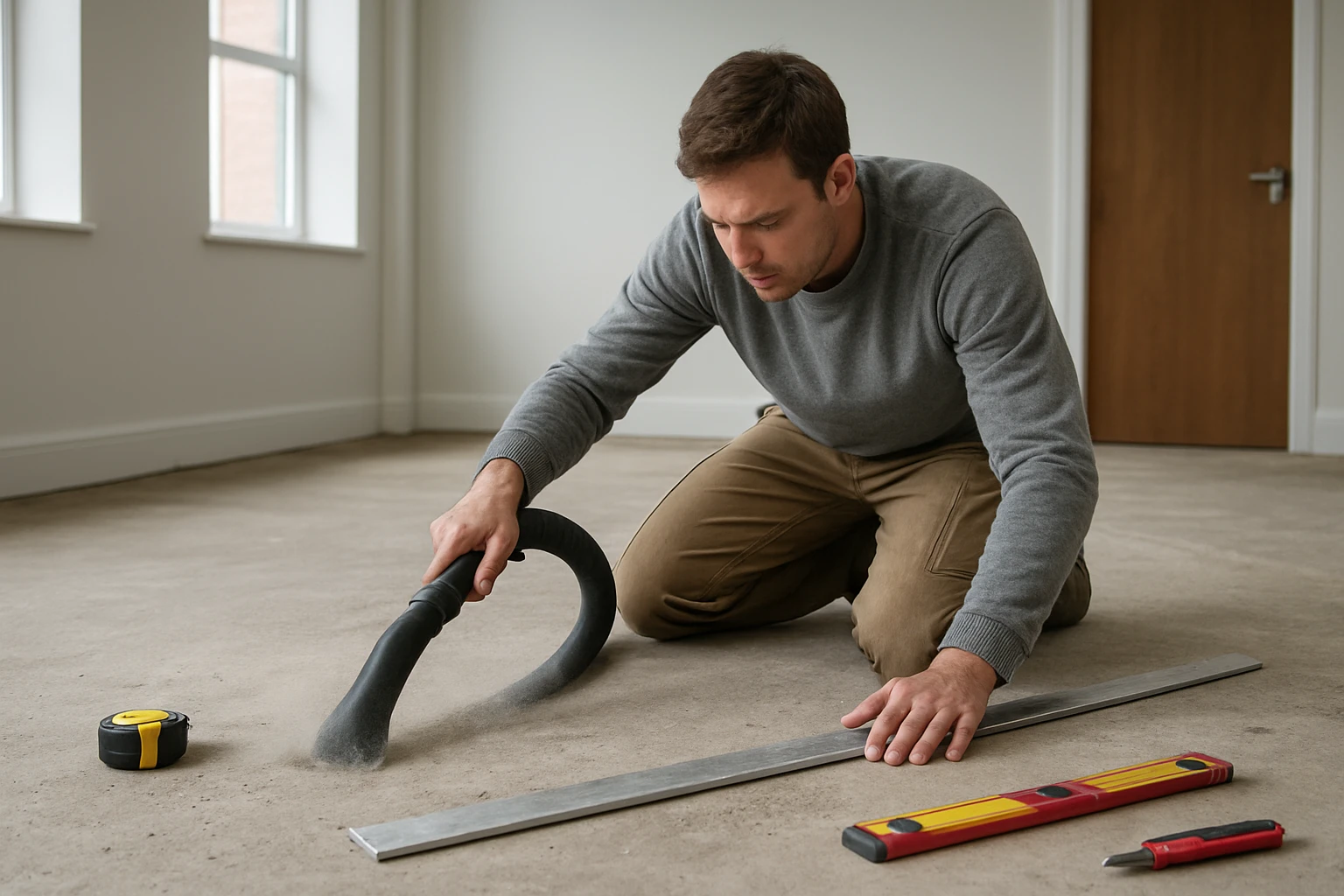
Tools Checklist:
- Utility knife with fresh blades
- Straightedge and measuring tape
- Seam tape and seaming iron if required
- Gripper strips and tackless strip tools
- Hammer, staples or adhesive as specified
Step by Step Installation:
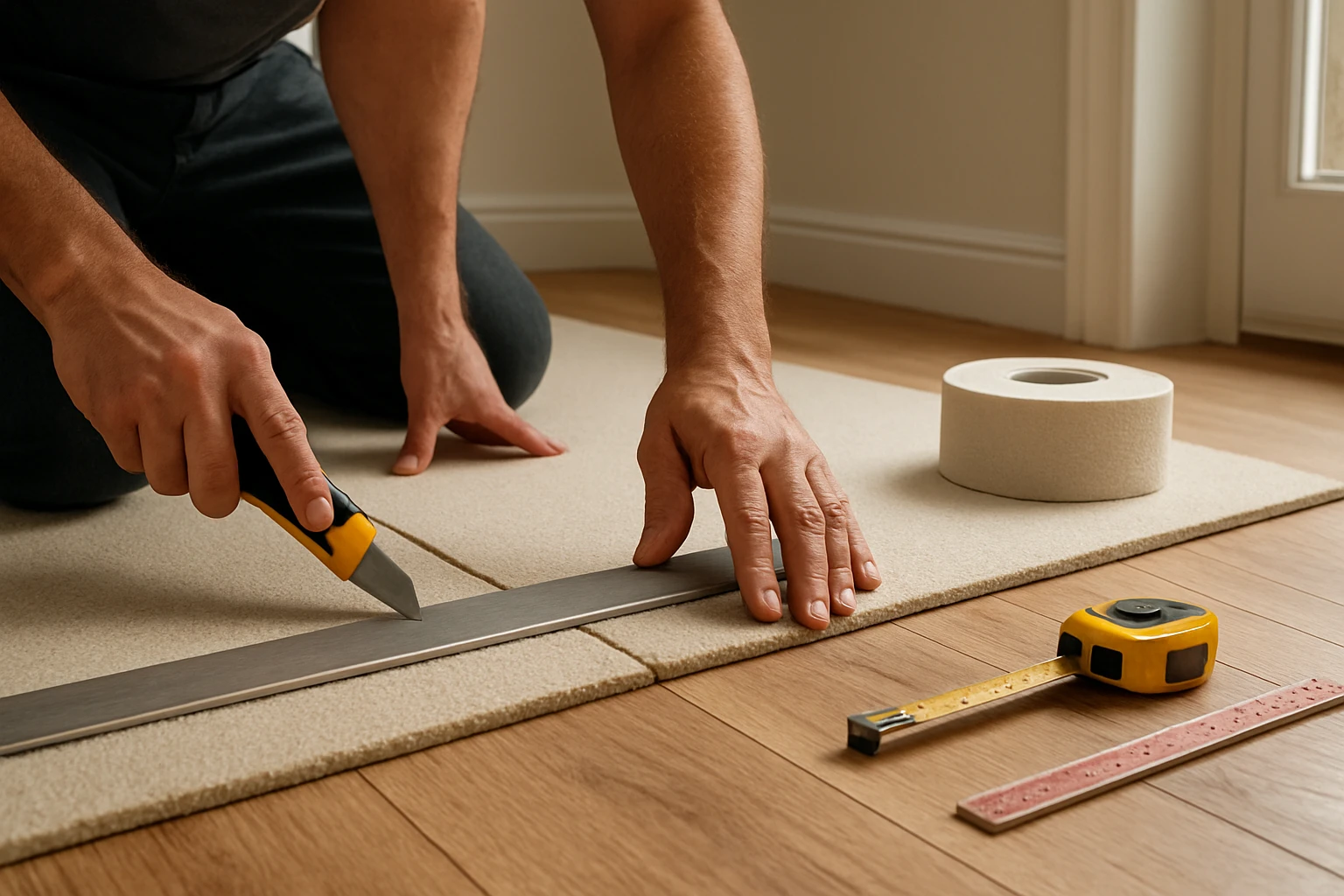
- Clear the room and make sure the subfloor is dry and level.
- Lay underlay rolls across the shortest room dimension to reduce seams.
- Butt seams tightly and use approved seaming tape if required.
- Trim around doorways and skirting so the underlay does not show after carpet fitting.
- Fix the underlay where needed and then fit the carpet according to the carpet installer instructions.
If you want a full walk-through of wall-to-wall carpet fitting, see How to Install Wall-to-Wall Carpets Step by Step for Homes and Offices.
Cost Lifespan and Warranty
Underlay price varies by material and density. Treat underlay as a long-term investment because a good underlay extends carpet life and comfort. Expect to pay more for high-density rubber but get longer life and better acoustic performance.
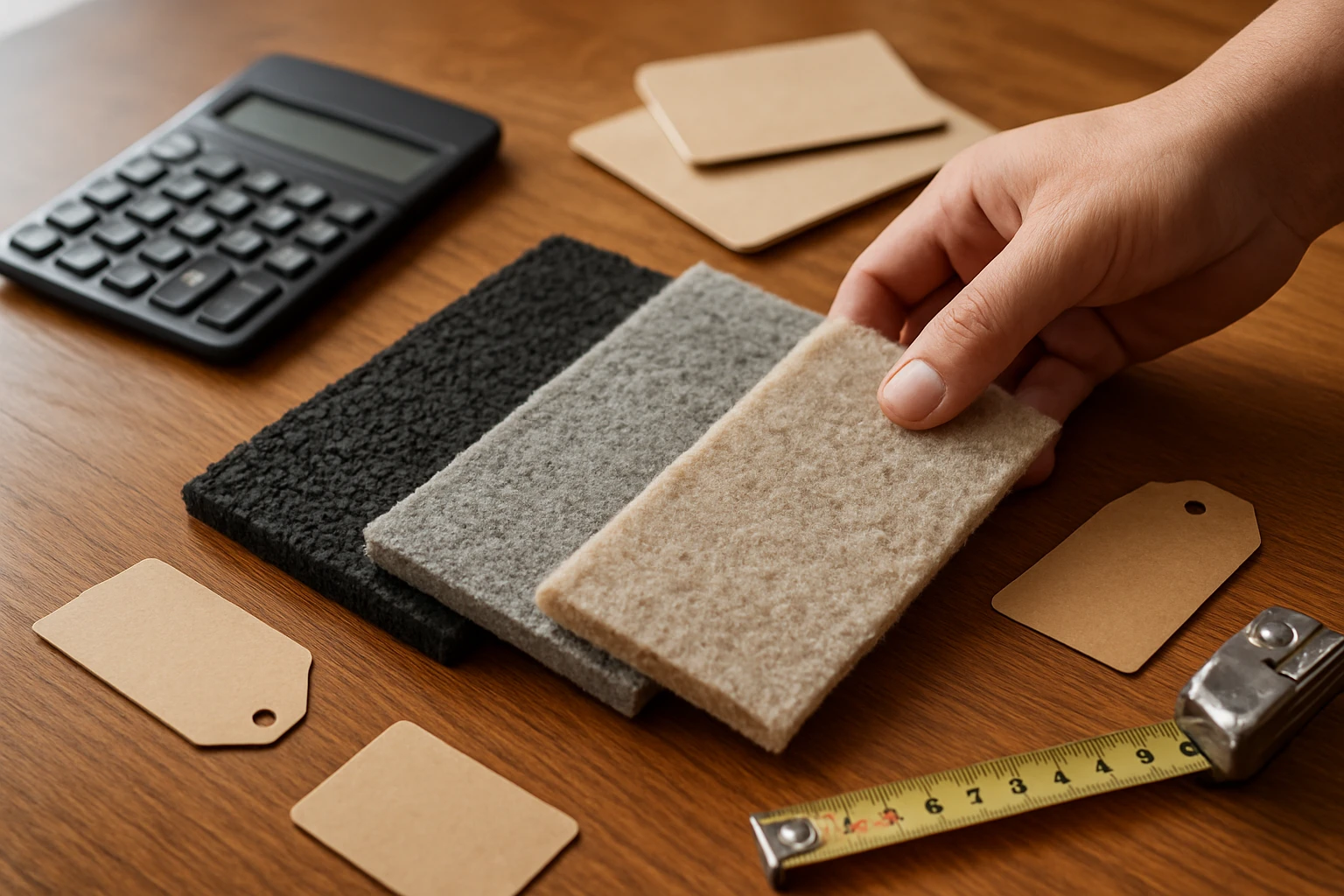
Typical cost guidance (material only):
- Low-end foam: low cost per m2. Shorter life.
- Rebond felt: mid cost per m2. Good balance of life and comfort.
- Dense rubber: higher cost per m2. Long life and strong support.
Look for underlay with clear warranty terms and follow the carpet maker’s recommendations so the carpet warranty stays valid. Keep receipts and fitting details to help with any later claims.
Common Mistakes and How to Avoid Them
Many problems come from poor matching and careless fitting. The common issues are choosing the wrong density, using over-thick underlay at doorways and poor seam joining.
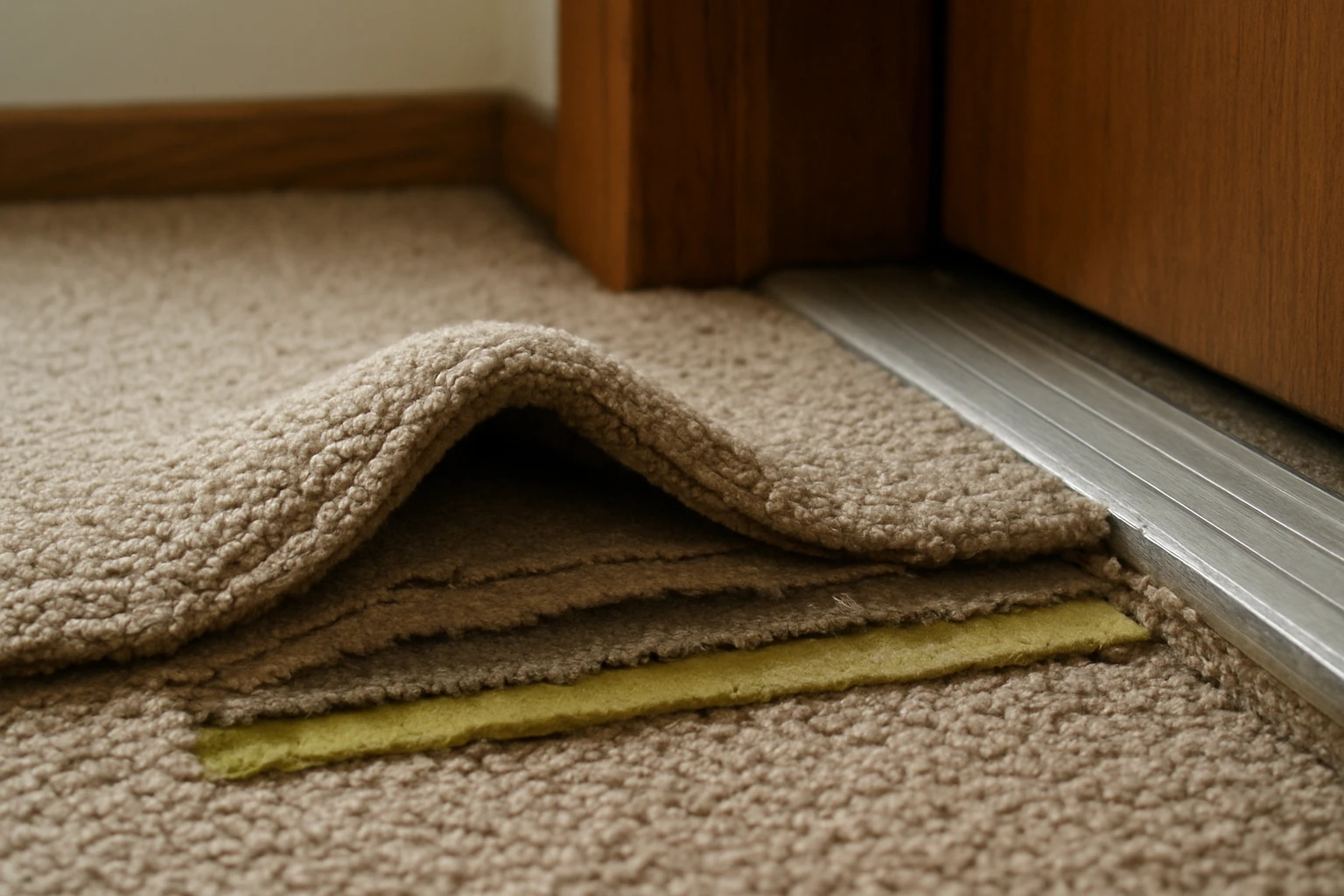
To avoid trouble:
- Do not use underlay meant for rugs or mattresses under a wall-to-wall carpet.
- Trim and butt seams properly to prevent lumps.
- Replace underlay when changing carpet if it is older than 8 to 10 years or shows heavy compression.
Best Picks for Specific Rooms
Different rooms have different needs. Match underlay to the room and the expected traffic for the best results. Below are practical picks and the reasons they work.
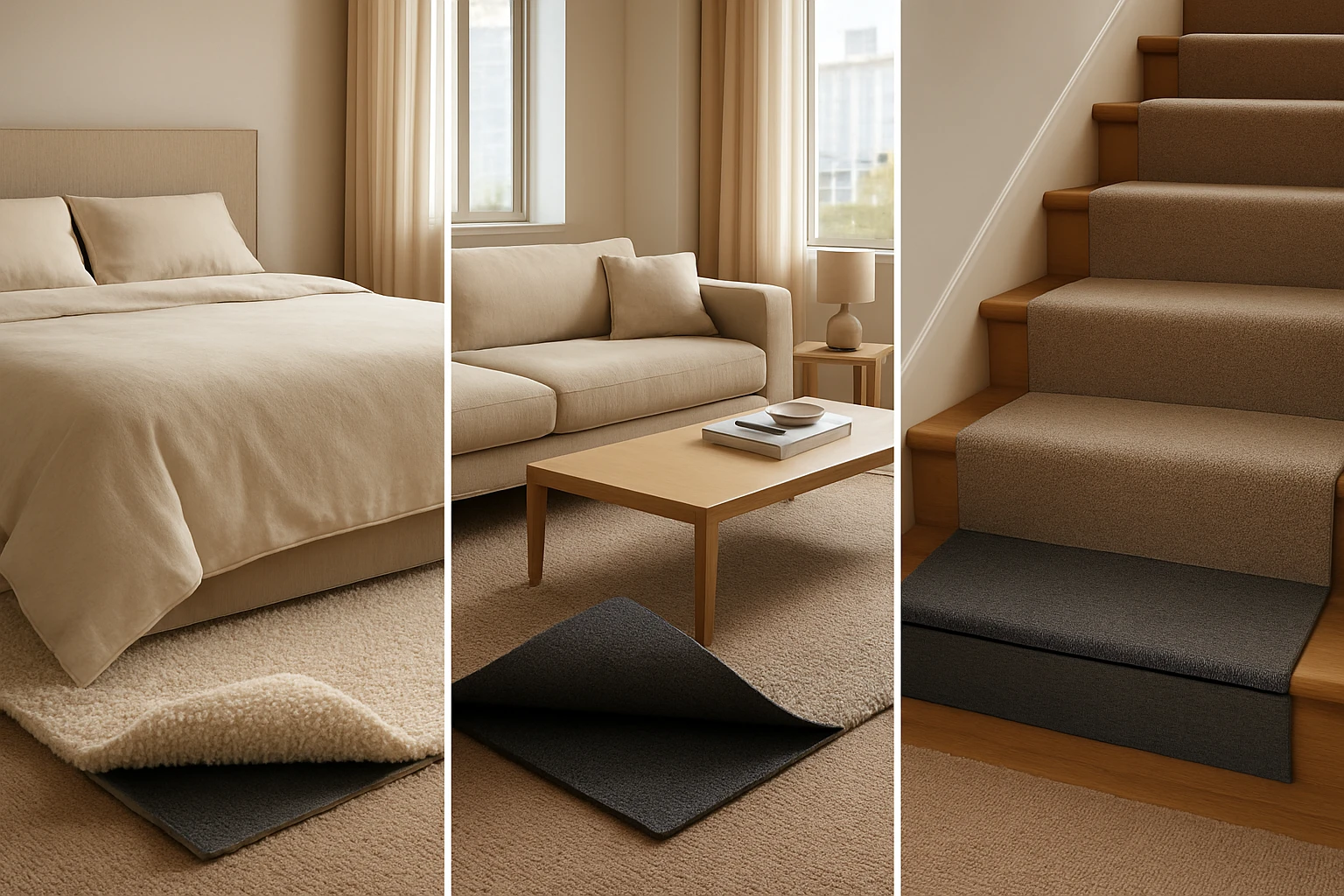
Living Room
Choose a medium-thick, high-density underlay for comfort and support where furniture sits. It helps protect the carpet pile from matting under chairs and sofas. See options for living areas at Living Room Carpet.
Office or High Traffic Area
Pick dense rubber or high-density rebond felt because these resist compression from constant foot traffic and office chairs. For commercial-style installs, check Office Carpet.
Stairs
Use crumb rubber or a stair-rated underlay that gives bounce-back and strong edge support. Stairs take point loads each step so density matters more than thickness. For stair-specific carpets, see Stair Carpet.
Mosque or Prayer Areas
Choose underlay that is stable, low-odour and easy to keep clean. A durable rebond felt or dense rubber that meets local comfort and hygiene needs often works best. See relevant floor coverings at Mosque Carpet.
Environmental and Health Considerations
If low emissions matter in your home, look for underlay labeled low-VOC or with eco certifications. Natural fibre underlays can be a good choice for allergy-sensitive spaces. Recycled rubber gives a use for waste rubber without heavy processing.
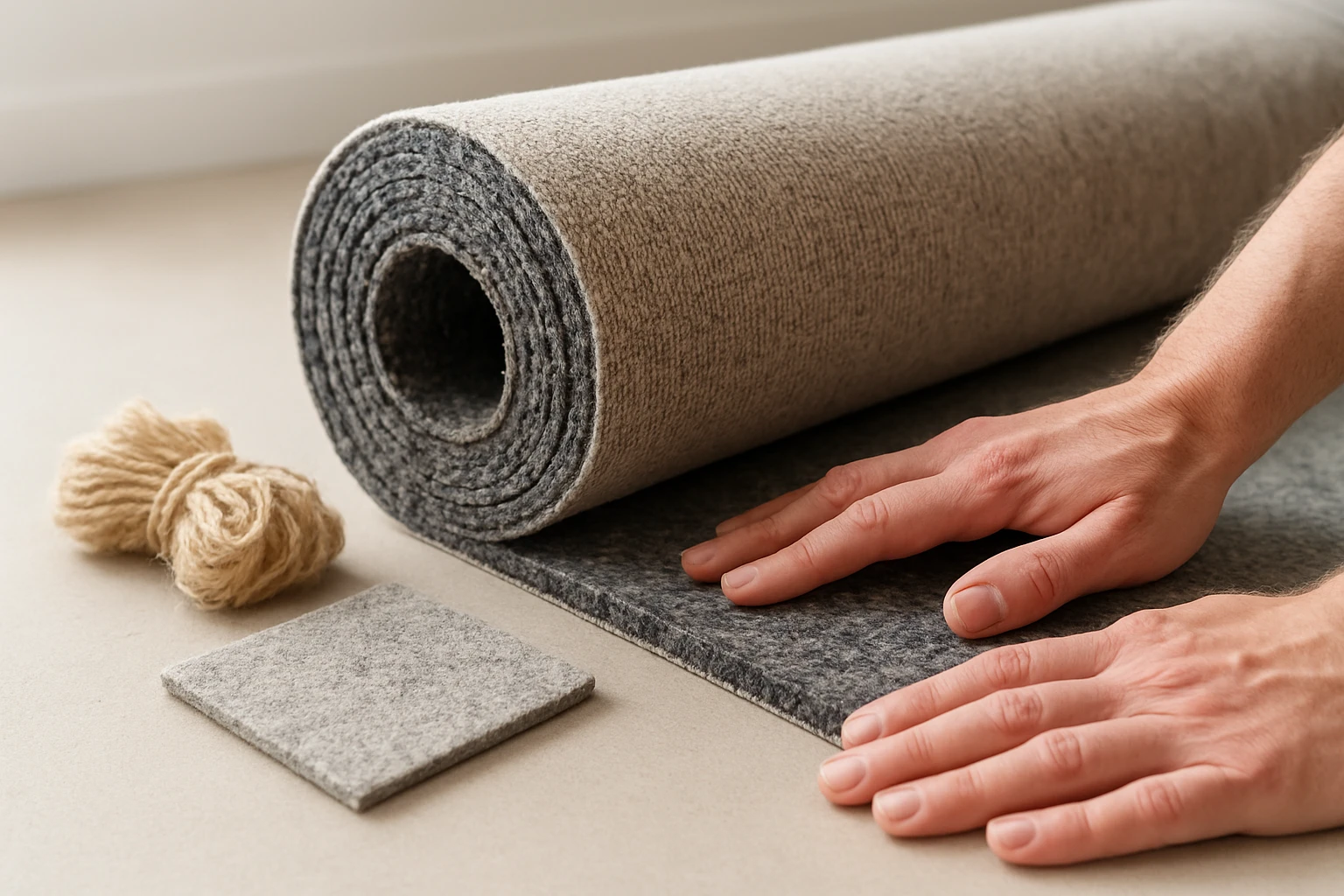
A common mistake is assuming recycled always means lower quality. Many recycled rubber underlays meet high standards, so check density and warranty rather than relying on a single label.
Quick Comparison Chart for Fast Decisions
| Room Type | Recommended Underlay | Thickness | Priority |
|---|---|---|---|
| Bedroom | Foam or felt | 6–8 mm | Comfort and warmth |
| Living Room | Rebond felt or dense rubber | 6–8 mm | Durability and support |
| Office | Dense rubber | 3–6 mm | Wear resistance |
| Stairs | Crumb rubber | 5–8 mm | Edge support and resilience |
| Mosque / Worship | Dense felt or rubber | 6–8 mm | Hygiene and durability |
Where to Buy and Local Notes
When buying locally, inspect samples under the same lighting as your room and ask for a small offcut to test under a carpet corner for a few days. If you prefer both carpet and underlay from a single trusted supplier, check Carpet underlay and match the underlay to the wall-to-wall carpet you plan to buy at Wall to Wall Carpet. For a wider look at carpet types that pair well with different underlay choices, see 15 Best Types of Wall-to-Wall Carpet for Dubai Homes & Offices.
Final Selection Checklist
- Confirm the underlay density rating and recommended use.
- Match thickness to door clearance and carpet pile.
- Ask the carpet maker whether a specific underlay affects the carpet warranty.
- Test a small area before full purchase if possible.
- Keep installation receipts and fitting notes for future warranty needs.
Choosing the right underlay for wall-to-wall carpets makes a clear, practical difference to comfort, noise and how long the carpet looks good. Take time to match material, thickness and density to your room and carpet type and you will avoid common mistakes and extra cost later.
Frequently Asked Questions
What Thickness Underlay Is Best for Wall-to-wall Carpets?
For most wall-to-wall carpets a 6 mm to 8 mm underlay with medium to high density is a good balance of comfort and support. Choose thinner high-density underlay for low-pile commercial carpets and denser options for stairs.
Will Underlay Help Reduce Noise Between Floors?
Yes. A dense underlay can reduce impact noise by roughly 20% to 35% depending on the floor build and materials. For best results choose dense rubber or high-density felt and check acoustic ratings when available.
Should I Replace the Underlay When I Replace the Carpet?
In many cases yes. If the old underlay shows compression, stains or smells, replace it. Replacing underlay with the carpet helps the new carpet perform as intended and can extend its life.
Which Underlay Is Best for Stairs?
Crumb rubber or a specific stair-rated dense underlay is usually best. Stairs need resilience at edges and resistance to point loads, so choose material designed for that use.
How Do I Keep My Carpet Warranty Valid When Fitting Underlay?
Follow the carpet manufacturer recommendations for compatible underlay types and fitting methods. Keep receipts and installation notes, and ask the carpet supplier which underlay they endorse before buying.