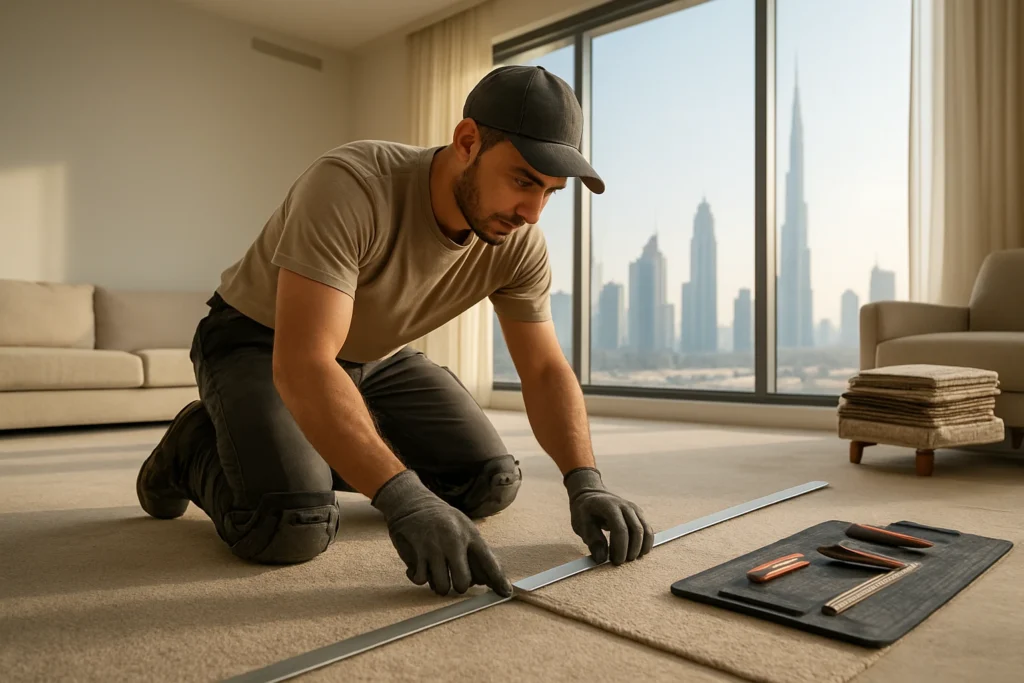
Installing wall-to-wall carpet requires careful measuring, the right underlay, and proper stretching so the carpet sits flat and lasts for years. To understand how to install wall-to-wall carpets, start by measuring the room, choosing a carpet that suits the traffic and budget, preparing the subfloor, fitting tack strips and underlay, then seam, stretch, and trim the carpet so the edges meet doors and walls cleanly.
Key Statistics
- Average lifespan of a quality wall-to-wall carpet: 7 to 15 years depending on usage and care.
- Typical installation time for a 15 m2 room by a small team: 2 to 4 hours once the room is prepared.
- Common material cost range in Dubai for wall-to-wall carpet (material only): AED 40 to AED 250 per m2 depending on fibre and pile.
In this article the team at Dubai Carpet Hub walks you through practical steps, tools, cost tips and common pitfalls so you can manage or supervise a clean, safe installation at home or in an office.

Measure Room and Calculate Carpet Area
Start by measuring length and width, then calculate the total area in square metres. Measure each irregular section separately and add them together, and allow 5 to 10 percent extra for waste when cutting around doors and corners.
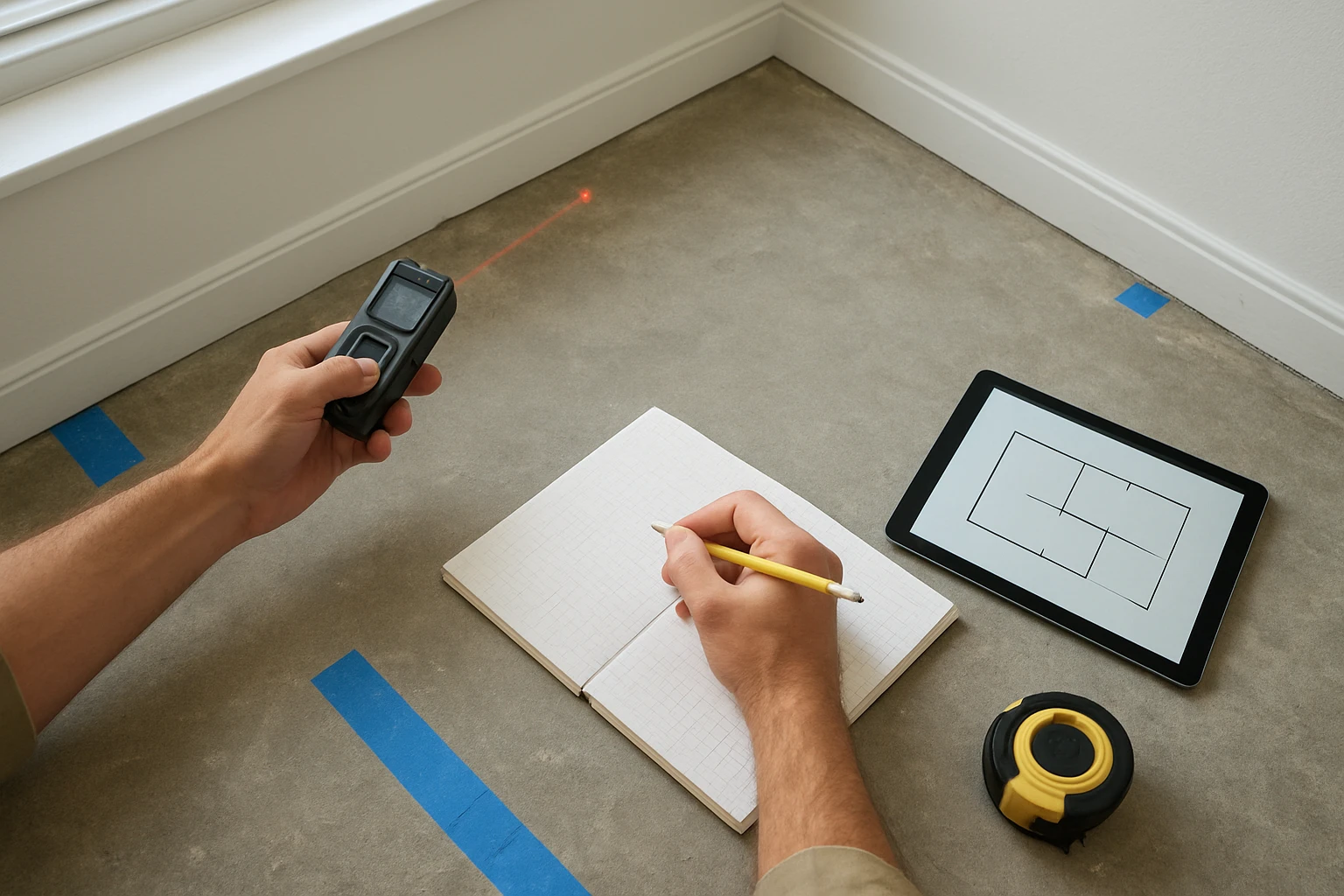
How to measure correctly:
- Measure the longest length and widest width for rectangular rooms. For L-shaped or irregular rooms, break the room into rectangles, measure each, then add.
- Measure at floor level and record to the nearest centimetre. Double-check doorways and built-in furniture areas.
- Add 5 to 10 percent allowance for seams and trimming.
Table: Simple Area Calculations
| Room Shape | How To Measure | Add Waste |
|---|---|---|
| Rectangle | Length × Width | +5% |
| L-shape | Split into 2 rectangles, add both areas | +7% |
| With alcoves | Measure each alcove separately | +10% |
For detailed steps on calculating area, see How to Calculate Carpet Area: A Complete Step-by-Step Guide.
Choose Carpet Type and Materials
Pick a carpet that fits the room’s use, budget and expected wear. Think about fibre type, pile height and backing because each affects comfort, lifespan and cleaning.
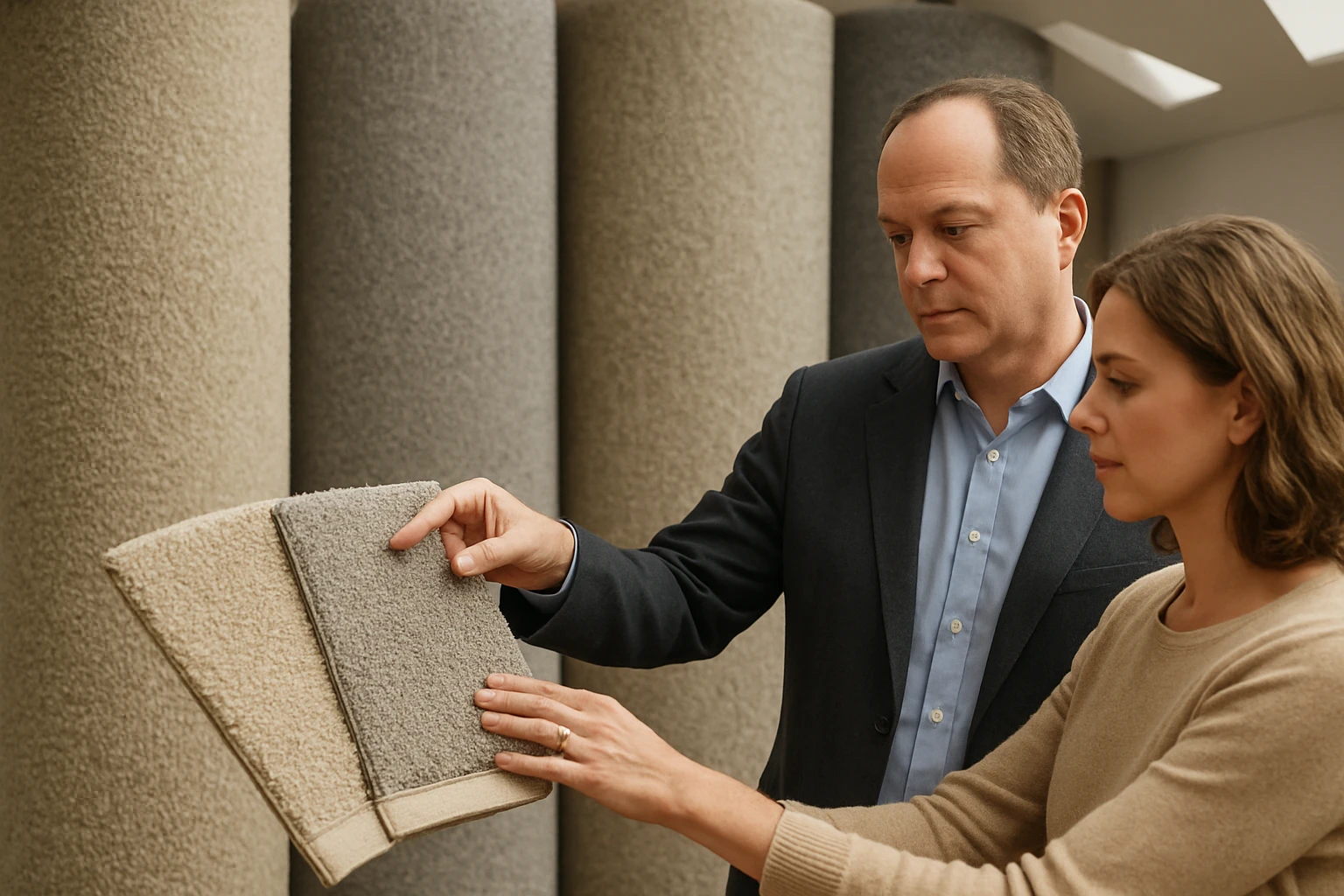
Common carpet types and where to use them:
| Carpet Type | Durability | Typical Cost Range (AED/m2) | Best Use |
|---|---|---|---|
| Nylon | High | 80 to 250 | High traffic areas, offices, living rooms |
| Wool | Medium to High | 150 to 300 | Formal living rooms, hotels, premium offices |
| Polypropylene (Olefin) | Medium | 40 to 120 | Basements, low-traffic rooms, budget projects |
| Triexta/Polyester | Medium | 70 to 180 | Bedrooms, low to medium traffic |
A common mistake is choosing a carpet by colour alone without checking pile and backing. Pile affects how well the carpet hides traffic paths and how easy it is to clean. For an overview of types suited to Dubai homes and offices, visit 15 Best Types of Wall-to-Wall Carpet for Dubai Homes & Offices.
Prepare the Subfloor and Remove Old Flooring
A stable, clean subfloor is essential. Remove old carpet, tack strips and nails, and repair any dips or bumps before laying underlay.

Steps to prepare the floor:
Clean and Inspect the Subfloor
Check for moisture, loose boards or tile grout. Use a moisture meter on concrete floors. Many carpets need a dry surface. Fill small cracks and level any uneven spots.
Tool Checklist:
- Vacuum and broom
- Moisture meter
- Floor patch compound and trowel
Remove Old Tack Strips and Fix Nail Holes:
Pull old tack strips and sink any protruding nails. Replace damaged sections of subfloor if they flex under weight and sand rough patches smooth.
Install Tack Strips and Underlay
Tack strips hold the carpet edges and keep the stretch. Underlay cushions the carpet and helps it last longer, so choose one that matches the carpet and lay it flat.
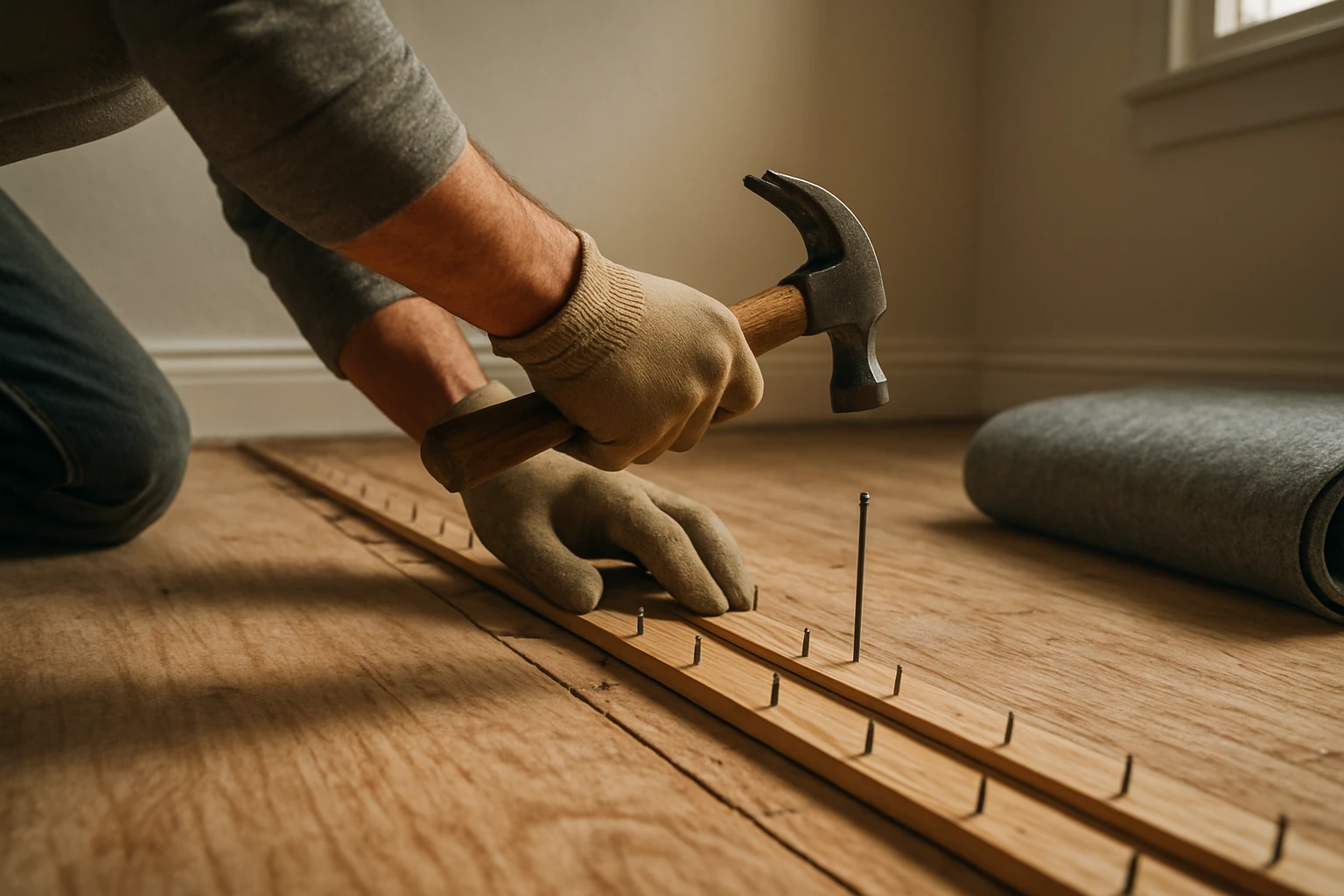
Underlay and tack strip tips:
- Fit tack strips 6 to 8 mm from the wall so carpet can tuck behind the skirting.
- Join underlay seams with tape and use adhesive if the underlay maker recommends it.
- Secure underlay with staples or adhesive so it does not move while you lay the carpet.
Lay and Seam the Carpet
If your carpet comes in multiple widths, cut and seam the pieces so the pattern lines up and seams fall where they are least visible. Use seam tape and a seaming iron for a tight join.
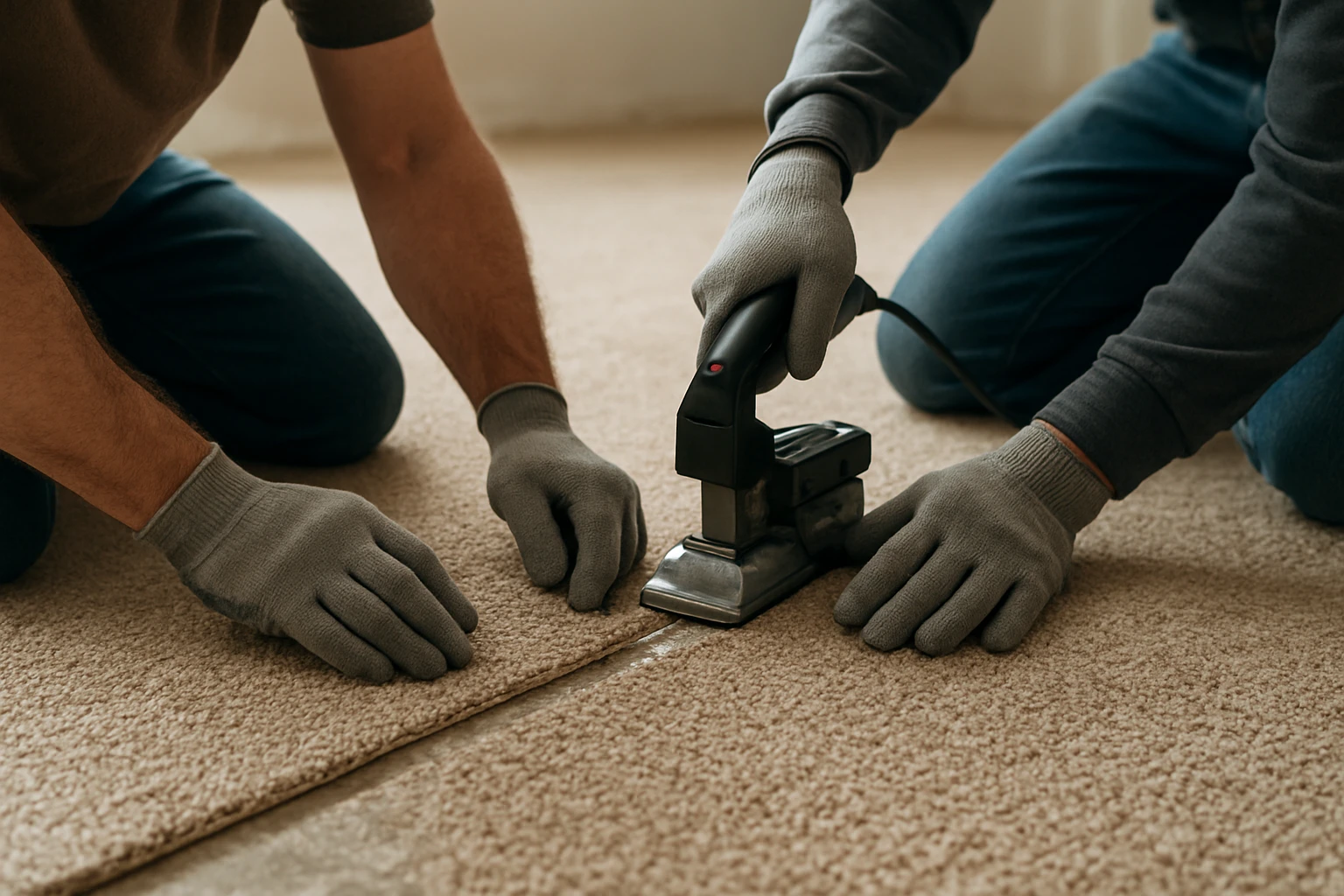
Cut and Position Panels
Measure twice before cutting. Lay panels with the pile running the same way, usually toward the main room entrance so the carpet looks uniform.
Seam Technique:
- Use a straight edge and a sharp carpet knife for cutting.
- Heat seam tape with a seaming iron from underneath and press the edges together with a roller for a flat finish.
A clean seam prevents snagging and reduces the chance of visible gaps in sunlight.
Stretch and Trim the Carpet
Stretching removes wrinkles and ensures a firm fit at the edges. Use a power stretcher for rooms larger than a small bedroom and a knee kicker for small adjustments.
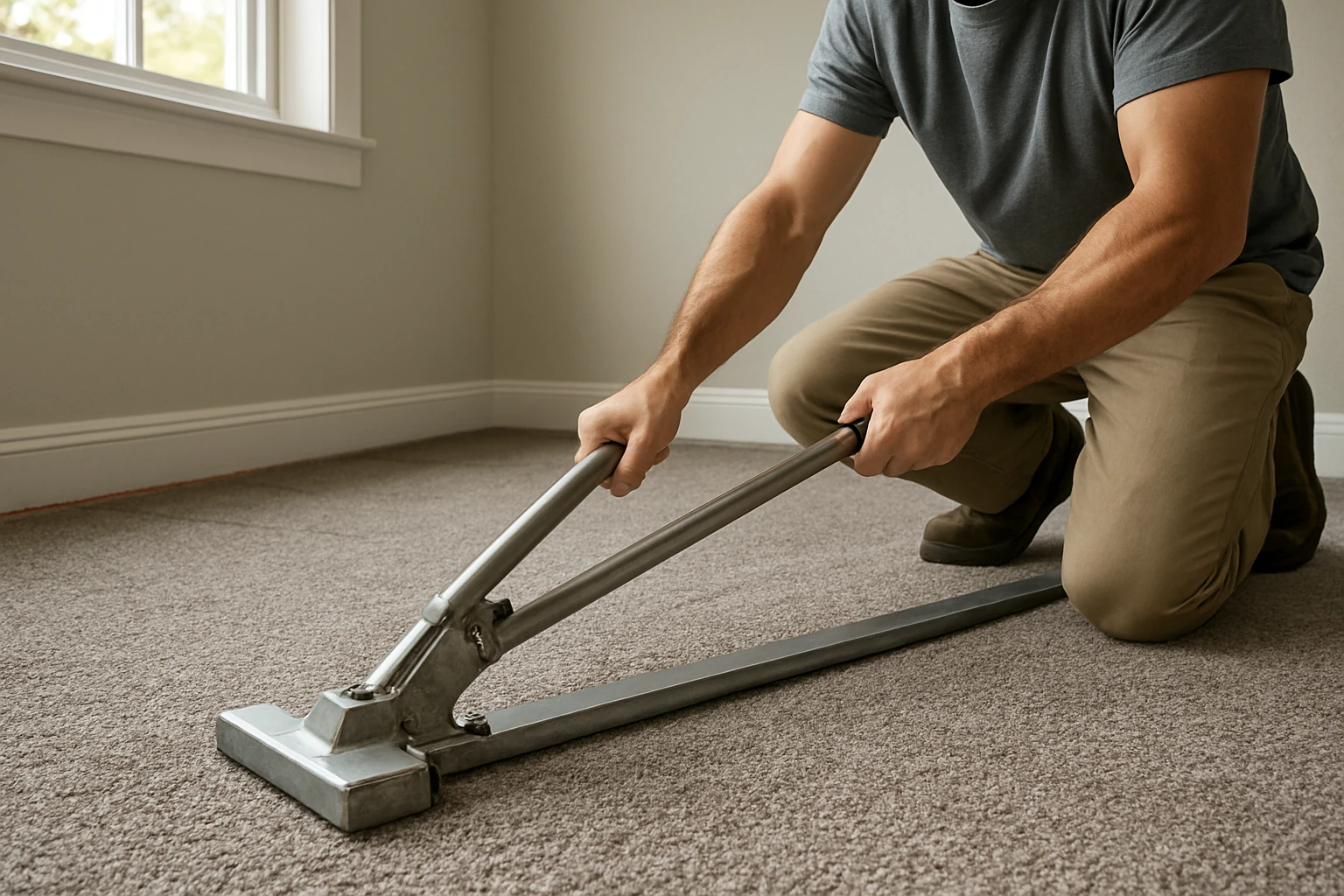
Key steps in stretching:
- Start at the centre of a wall and work toward the corners.
- Use the knee kicker to secure the carpet to the tack strip, then finish with a wall-to-wall power stretcher for full tension.
- Trim excess carpet with a straight edge and carpet knife, leaving enough to tuck behind the skirting.
Common pitfall: Not using a power stretcher on larger rooms leads to future ripples and gaps.
Finishings, Doorways and Stairs
Doors, thresholds and stairs need careful trimming and secure fixing so the carpet is safe and neat.

Stair tips:
- For closed riser stairs, wrap the carpet around each tread and secure with adhesive or staples under the tread.
- Use stair nosing where recommended to protect the edge.
- At doorways use transition strips if the adjacent floor is tile or wood.
Care, Maintenance and Troubleshooting
Proper care keeps a newly installed carpet looking good and lasting longer. Regular vacuuming and quick stain treatment are the most effective measures.

Daily and long-term care:
- Vacuum 2 to 3 times a week in high traffic areas and once a week elsewhere.
- Blot stains immediately with a clean cloth and mild detergent. Avoid rubbing, which can damage fibres.
- Schedule a professional deep clean every 12 to 24 months depending on use.
Troubleshooting common problems:
- Waves or ripples: usually due to insufficient stretching. A re-stretch by a professional will fix this.
- Visible seams: check pile direction and seam adhesion. Re-seaming may be required.
- Excess shedding: new carpets shed slightly for a few weeks. Heavy shedding after months can indicate low-quality yarn.
Costs, Warranties and When to Call a Pro
Costs depend on material, underlay and labour. Labour rates and product choices in Dubai vary, so get at least two quotes and check warranties carefully.
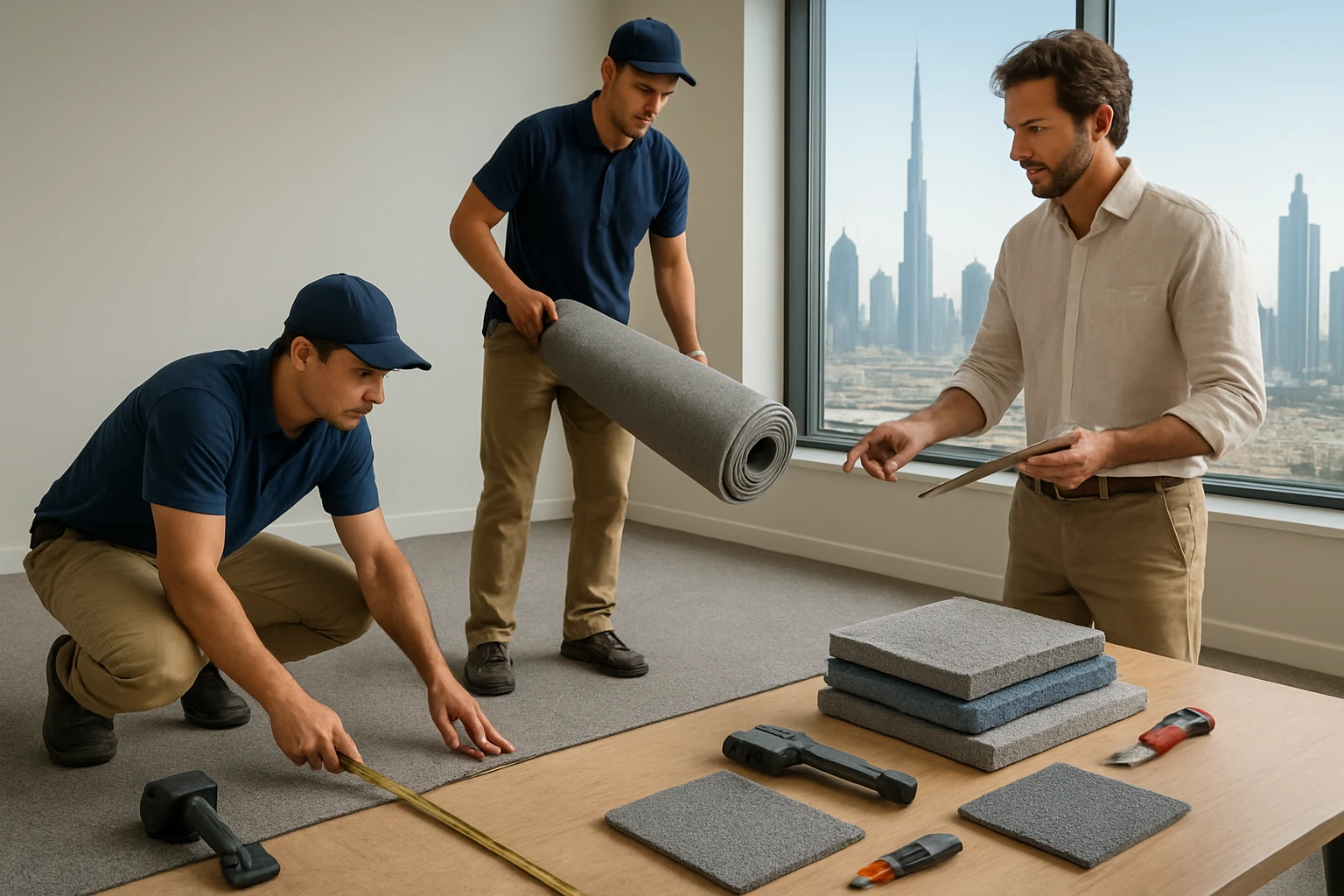
Cost estimate table (materials and typical installation per m2, Dubai estimates):
| Item | Low Range (AED/m2) | High Range (AED/m2) |
|---|---|---|
| Carpet material | 40 | 250 |
| Underlay | 8 | 35 |
| Labour and fitting | 25 | 80 |
| Seams and extras | 5 | 40 |
For a fuller local breakdown see Wall-To-Wall Carpet Cost in Dubai, Prices and Estimates.
Warranties and when to hire a pro:
- If you see large subfloor repairs, moisture issues, or complex stair or multi-room seams, call a professional.
- Keep warranty and installation records. Many warranties require professional fitting to remain valid.
- For peace of mind or tight timelines, a certified installer will be faster and cut the chance of errors.
Quick Checklist Before You Start
- Measure room and add 5 to 10 percent waste.
- Choose carpet type and underlay suitable for traffic.
- Clear room and prepare subfloor, check moisture.
- Fit tack strips and underlay securely.
- Cut, seam, stretch and trim the carpet.
- Finish doors and stairs, vacuum and schedule periodic deep cleaning.
Internal Resources and Further Reading
- For professional services and supply options, see Wall to Wall Carpet.
- For step details and alternative techniques, review How To Install Wall to Wall Carpets: Complete Step-by-Step Guide.
If you compare quotes, ask installers to show previous work photos and to explain their seaming and stretching method. In our experience, installers who show their tools and walk you through each step deliver the most reliable results.
Frequently Asked Questions
How Long Does a Typical Wall-to-wall Carpet Installation Take?
For a single average-sized room of about 15 m2, a prepared site usually takes 2 to 4 hours for a small professional crew. If the subfloor needs repair or there are complex seams and stairs, allow a full day or more.
Can I Install Wall-to-wall Carpet Myself or Should I Hire a Professional?
You can install small rooms yourself if you have basic tools and patience, but larger rooms, stairs, or rooms with tricky seams and thresholds are best left to professionals to avoid ripples and poorly hidden seams.
What Tools Do I Need to Do a Proper Installation?
Essential tools include a tape measure or laser measure, straight edge, sharp carpet knife, seam iron and tape, knee kicker, power stretcher for larger rooms, hammer and nails for tack strips, and underlay adhesive or staples.
How Much Extra Carpet Should I Order for Waste and Seams?
Order 5 to 10 percent extra for straight rooms, and up to 10 percent for irregular rooms or patterned carpets so you can match repeats and cover seams.
How Do I Choose the Right Underlay?
Choose underlay rated for your carpet type and traffic level. Dense foam or felt underlays suit heavy traffic, while thinner underlay works in low-traffic bedrooms. A proper underlay improves comfort and extends carpet life.